Archive for "Bedtime Stories"
Planning a trip to Italy? Browse and read our useful and informative articles about the endless range of attractions and experiences in this lovely country.
Travel through the beauties of Italy with us. Visit our blog!
October 8, 2026
Villa Belvedere San Bartolo: a Return to Nature between the Adriatic and the Romagna Hills
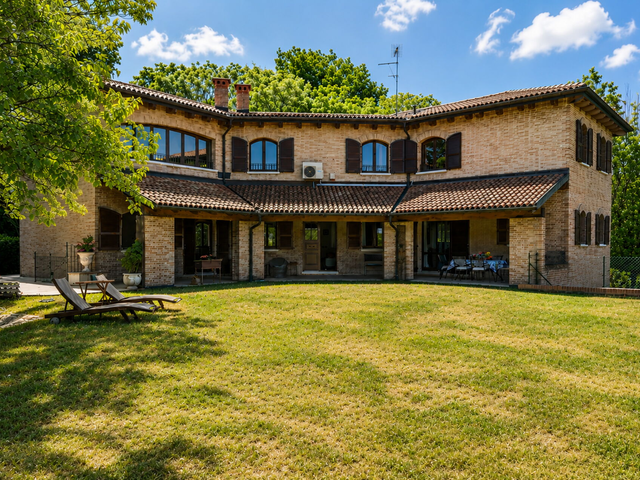
Nestled between the rolling hills of the Romagna Food Valley and the sea, Villa Belvedere San Bartolo is not just a luxury residence, but a true life project. Born from the deep desire to reconnect with nature, this dwelling tells the story of its owner who, after an international career, has created an oasis of peace and sustainability, opening its doors to those seeking a unique refuge.
"The desire to share beauty"
The decision to build and subsequently rent out this wonderful property has deep roots. "I built Villa Belvedere San Bartolo using principles of total green building to get back to nature after a lifetime of working in Switzerland and traveling all over the world to war zones" , the owner recounts. The choice to welcome guests was a natural step: "I decided to share this lifestyle with those looking for the same peace, because I believe that sharing in life is one of the most beautiful experiences."
A Unique Oasis between Sea and Nature
What makes Villa Belvedere San Bartolo truly extraordinary is its unbreakable bond with the surrounding environment. The villa is a unique space, a home that "breathes" and recycles water to achieve absolute harmony with the landscape. From the garden in front of the porch, the view is unparalleled: at night you can admire the Milky Way, while by day the gaze sweeps over the Adriatic Sea until you can spot, on the clearest days, the Albanian coast. Strategically located on the border between Emilia-Romagna and Marche, the villa allows you to enjoy both equipped beach resorts and wild shores, all embraced by the profound tranquility of a private woodland.
The Soul of Romagna Tradition
Every detail inside the villa is a tribute to the land that hosts it. The style, the local terracotta floors, the furniture, and even the cutlery speak of the rich Romagna tradition. Among the treasures of the house, the owner has a special connection with the large fireplace in the central living room: "It is built with bricks from an ancient valley kiln and recovered and adapted 18th-century beams." Another piece of his heart is the cast-iron cookstove that belonged to his grandmother, located in the large dining room. It is not merely a simple antique, but a beautiful wood stove that is still perfectly functional for cooking and heating the room.
Wellness and Slow Living
Beyond pure contact with nature, the villa offers an unparalleled relaxation experience. Guests can enjoy a wonderful indoor pool, sauna, hot tub, billiard room, and relaxation area. They are "unique slow-living corners for country villas in the Food Valley territory," as pointed out by the owner, whose favorite areas remain the living room with its iconic fireplace and the large master bedroom overlooking the sea.
What to Expect from a Stay at Villa Belvedere San Bartolo
Those who choose this residence must prepare to experience peace, elegance, and wellness; the ideal place to rediscover oneself and human relationships. Guests will be enchanted by the serene atmosphere that envelops the property, where the surrounding greenery offers a deep sense of privacy and disconnection. Completing the enchantment is the famous and warm Romagna hospitality: the property offers top-quality services, with the possibility of organizing zero-mile breakfasts and dinners, local wine tastings, and nature excursions.
Villa Belvedere San Bartolo: Much more than a holiday
A stay at Villa Belvedere San Bartolo is a journey into wellness, an escape from the daily hustle and bustle to rediscover slow rhythms, authentic flavors, and a deep connection with nature and the sea.
For more details on Villa Belvedere San Bartolo, its services, and availability, you can visit the official page
Read More
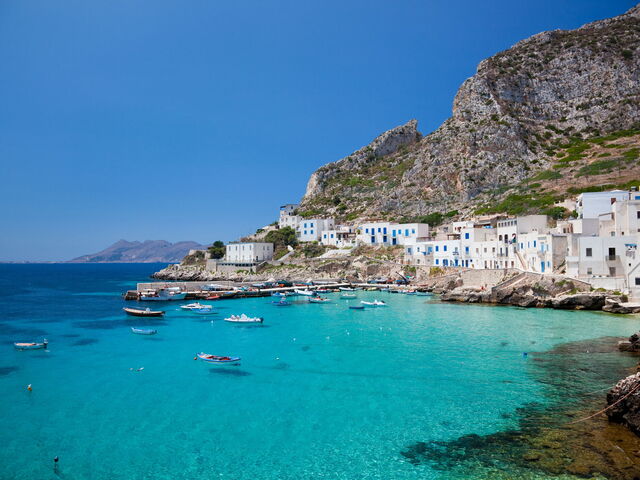
Close your eyes and imagine a place where the air smells of salt and jasmine, where the sun sets behind the silhouette of a smoking volcano, and where the rocks in the sea aren’t just rocks, but the remnants of a giant’s fury.
Welcome to Aci Trezza. This is not just a destination; it is a story that has been told for three thousand years. At Posarelli Villas, we believe that your holiday should be more than a stay—it should be an entry into a timeless legend.
The Rage of the Cyclops: A Myth Under the Stars
Long before there were maps or villas, these shores belonged to the gods and the monsters. Legend has it that the giant Polyphemus, the one-eyed son of Poseidon, lived in the dark caves of Mount Etna, watching the horizon with his single, fiery eye.
One night, the clever hero Odysseus blinded the giant to escape his clutches. As the Greek ship sailed away into the moonlight, the blinded Polyphemus roared in agony, his cries shaking the very foundations of the volcano. In a fit of powerless rage, he ripped massive jagged peaks from the earth and hurled them into the sea, trying to crush the escaping hero.
Experience the Legend: Villa Acqua Marina
Touching the Ionian Blue: A Waterfront Sanctuary on the Cyclopean Coast.BOOK NOW
The giant missed his mark. But those stones—the Faraglioni—remained there forever. Today, when you sit on your villa’s terrace at twilight, you can still see them: dark, silent giants standing guard in the water, glowing orange as the sun dips below the horizon.
The Whispers of the Medlar Tree: A Tale of Resilience
As the centuries passed, the myths of giants gave way to the stories of men. If you walk through the narrow, winding alleys of the village, you will hear another story—one of salt, sweat, and silver fish.
This is the world of "I Malavoglia" (The House by the Medlar Tree), the famous family of fishermen created by the writer Giovanni Verga. Published in 1881, this masterpiece is the ultimate Sicilian epic. It’s a story of a family that, like the sturdy boats in the harbor, tried to navigate the storms of fate.
Authentic Sicilian Charm: Muna Retreat
A Timeless Sanctuary: Watching over the Cyclopean Coast.BOOK NOW
Walking through Aci Trezza today, you can still visit the Casa del Nespolo. It is a place of quiet beauty that showcases the humble tools and lifestyles of the people who inspired one of the greatest works of Italian literature. The fishermen you see mending their nets under the midday sun are the living echoes of that story.
Falling Asleep in the Heart of the Legend
In Aci Trezza, the line between the past and the present is as thin as the sea foam. Staying in this corner of Sicily is like stepping inside these pages. You aren't just a tourist; you are a guest of history.
You will fall asleep to the same sound of the waves that Odysseus heard and wake up to the same golden light that inspired Verga’s prose. As the moon rises over the Cyclopean Isles, casting a silver bridge across the water, you'll realize that Aci Trezza isn't just a place to stay—it’s a place to remember how beautiful the world can be.
Your Gateway to Myth: Villa La Capinera
The Eye of the Legend: Panoramic Luxury above the Faraglioni.BOOK NOW
Are you ready to wake up where myth meets reality? Whether it's the charm of Villa Acqua Marina, the peace of Muna Retreat, or the view from Villa La Capinera, your dream home in Aci Trezza is just a few clicks away. Explore our exclusive collection and book your stay in the land of the Cyclops today. Your front-row seat to history is already reserved.
Discover our Sicily Collection
Find your ideal sanctuary between myth and sea.
BOOK NOW
Read More
Villa Prokimea: A Dream Realized in the Heart of Corfu
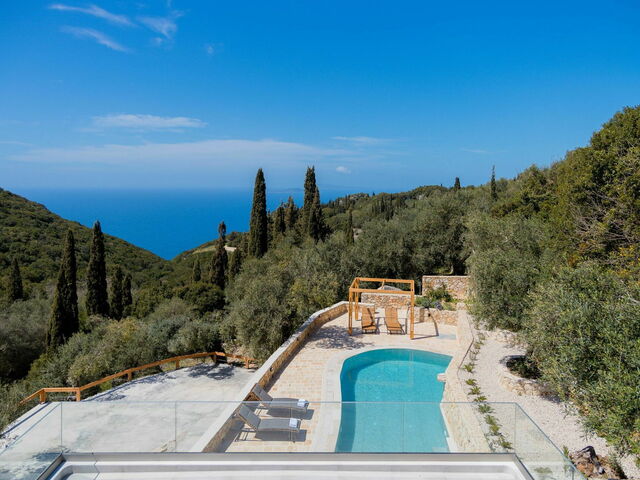
Nestled in the picturesque village of Makrades, Villa Prokimea is more than a luxurious retreat—it’s the embodiment of a family’s vision. For Theodora, the villa’s owner, it represents a lifelong dream of her father’s, lovingly brought to life amidst Corfu’s olive groves and breathtaking landscapes.
"A Builder’s Dream Come True"
The story of Villa Prokimea begins with Theodora’s father, a builder who always dreamed of creating a villa. "It was his lifelong aspiration, and when the opportunity came, we knew it was the right moment to bring this vision to life," she shares. Situated on a plot once dominated by olive trees, the villa honors its natural surroundings by preserving several of these ancient trees, blending modernity with nature.
A Unique Jewel in Makrades
Makrades is a quaint, traditional village where the unexpected presence of a villa with a pool creates a striking contrast. From Villa Prokimea, guests are treated to a spectacular panoramic view—to the left, the charming village of Krini; to the right, majestic mountains and the Ionian Sea. Theodora highlights, "The sunsets here are magical; it’s an experience you need to live to fully appreciate."
A Modern Twist with a Touch of Tradition
In designing the villa, Theodora chose to respect the heritage of Makrades while incorporating contemporary elements. "The village has narrow streets and historic buildings, so we opted for a modern style with wooden accents to create harmony between the old and the new," she explains. The result is a residence that feels both innovative and rooted in its setting.
A Love for Craftsmanship
Among the villa’s many features, Theodora holds a special fondness for two handmade wooden tables in the living room. "They’re not just functional but also works of art that add warmth and character to the space," she says, reflecting the family’s dedication to thoughtful design and authenticity.
Discovering Hidden Treasures
The villa’s most unique feature is a small cave visible from the kitchen through a large glass pane. "We illuminated it to create a stunning view at night, making it a focal point that guests find mesmerizing," Theodora reveals. This creative detail sets Villa Prokimea apart, offering a one-of-a-kind experience for visitors.
An Invitation to Reconnect
Guests at Villa Prokimea can expect more than a luxurious stay; they’ll find themselves immersed in nature, with opportunities for hiking and exploring the surrounding landscapes. Theodora emphasizes, "It’s a place to disconnect from the everyday and reconnect with what truly matters."
Villa Prokimea: A Dream Realized
Villa Prokimea is a haven of tranquility, elegance, and unparalleled beauty. From its stunning sunsets to its seamless blend of modernity and tradition, it offers an unforgettable escape. Whether you’re seeking a peaceful retreat or an adventure in Corfu’s breathtaking landscapes, Villa Prokimea promises an experience that lingers in your heart long after you leave.
Book your stay today and experience the dream.
.text-section {
margin-bottom: 30px;
}
h1 {
font-size: 2em;
margin-bottom: 10px;
}
p {
margin-bottom: 15px;
}
.image-gallery {
display: grid;
grid-template-columns: repeat(2, 1fr);
gap: 10px;
}
.image-gallery img {
width: 100%;
height: auto;
object-fit: cover;
}
.full-width-img {
width: 100%;
margin: 30px 0;
}
@media screen and (max-width: 768px) {
.image-gallery {
grid-template-columns: 1fr;
}
}
Read More
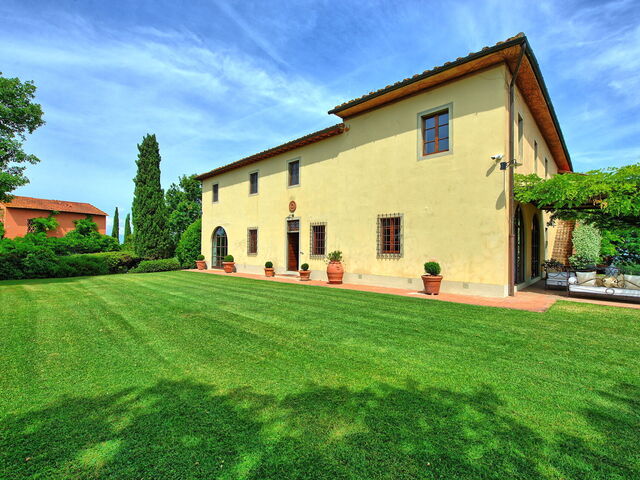
Villa Marliana: A Love Story in the Heart of Tuscany
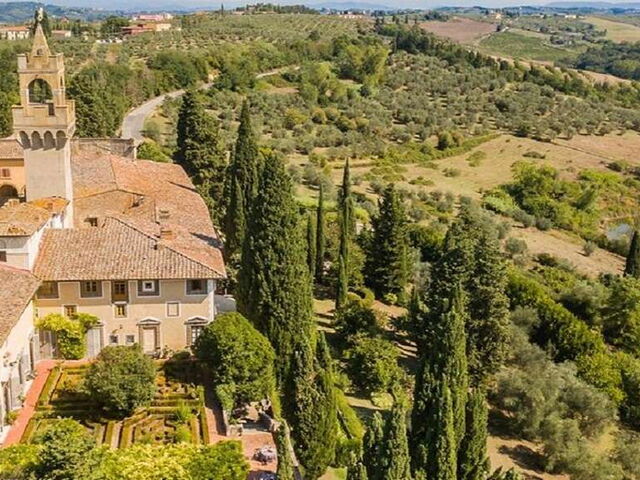
For more than 20 years, Villa Marliana has been more than just a home—it's been a witness to family memories, a quiet retreat, and now, a treasure shared with others. Perched on a sun-drenched hill in the heart of Tuscany, this villa tells the story of Ilaria, who lovingly restored it and opened its doors to guests looking for an unforgettable Tuscan experience.
"We Wanted to Give the House a New Life"
For Ilaria, the decision to bring Villa Marliana into the rental world wasn’t just about practicality—it was deeply personal. "This house has been in our lives for so long, and after years of only visiting occasionally, it felt as though it was fading away," she shares. "We wanted to give the house a new lease on life, to let others experience the beauty we had cherished for decades."
With great care, Ilaria oversaw a thoughtful restoration. The renovation not only preserved the villa’s soul but added new, luxurious touches, including extra rooms, private bathrooms, and a stunning outdoor pool. "It was important to us that the villa kept its character while offering modern comfort," Ilaria says. "Now, when we walk through the house, it feels alive again."
A Slice of Tuscany’s Heart
What sets Villa Marliana apart is its sense of place—a deep connection to the land it sits on. The villa offers breathtaking 360-degree views of rolling hills, vineyards, and olive groves, reflecting the quintessential Tuscan landscape. Set within an organic estate, guests can savor locally produced wine and olive oil, making for an authentic Tuscan experience that’s deeply rooted in tradition.
The villa itself is a harmonious blend of history and modernity. With 7 bedrooms and 6 bathrooms, it can comfortably accommodate up to 15 guests, making it ideal for large families or groups of friends. Villa Marliana also features a fully equipped kitchen, air conditioning, and Wi-Fi, ensuring that guests have all the modern comforts while surrounded by the rich cultural heritage of Tuscany.
A Home Filled with Stories
Every corner of Villa Marliana tells a story. The ceilings with exposed wooden beams, the terracotta floors, and the vibrant colors in each room reflect the Tuscan tradition and the owners' dedication to preserving the villa’s charm. The carefully curated furniture, sought out from across Tuscany, adds to the home’s authenticity and romance. A treasured painting of the house, created by a close friend, adds a deeply personal touch and captures the villa’s spirit of warmth and friendship.
A Place for Gathering
While every room in Villa Marliana holds its own charm, the large kitchen is especially enchanting. It opens onto a pergola draped in wisteria, where guests can dine at a long iron table, overlooking the surrounding hills. This is the heart of the villa—a space where family and friends come together, sharing meals and laughter, all while immersed in the serene beauty of Tuscany.
What Awaits Guests at Villa Marliana
Guests of Villa Marliana can expect an experience that goes far beyond ordinary. Here, the essence of Tuscany comes to life. From long sunset walks through the vineyards to relaxing afternoons by the large outdoor swimming pool, every moment is an invitation to reconnect with nature and history. The villa’s proximity to the region’s most famous art cities—Florence, Pisa, and Lucca—makes it the perfect base for exploring Tuscany’s rich cultural heritage. Despite its modern amenities, Villa Marliana remains a place where guests can step back in time and enjoy the tranquility of the countryside.
A Hidden Treasure
One of the villa’s best-kept secrets is its serene atmosphere. The quiet that envelops the villa is a rare luxury in today’s world, with the only sounds being the gentle chirping of birds and the rustle of leaves in the breeze. It’s this peaceful ambiance, coupled with the villa’s timeless beauty, that draws guests back time and again.
Villa Marliana: More Than a Villa, a Tuscan Dream
Villa Marliana is more than just a place to stay—it is an invitation to discover the heart and soul of Tuscany. Every detail, from the carefully chosen furnishings to the panoramic views, has been designed to offer guests a taste of timeless elegance. Whether you are looking for a peaceful retreat or a base for exploring Tuscany’s art and culture, Villa Marliana is the perfect choice for those seeking an authentic, luxurious, and unforgettable stay in the heart of Italy.Book now your stay.
.text-section {
margin-bottom: 30px;
}
h1 {
font-size: 2em;
margin-bottom: 10px;
}
p {
margin-bottom: 15px;
}
.image-gallery {
display: grid;
grid-template-columns: repeat(2, 1fr);
gap: 10px;
}
.image-gallery img {
width: 100%;
height: auto;
object-fit: cover;
}
.full-width-img {
width: 100%;
margin: 30px 0;
}
@media screen and (max-width: 768px) {
.image-gallery {
grid-template-columns: 1fr;
}
}
Read More
October 10, 2024
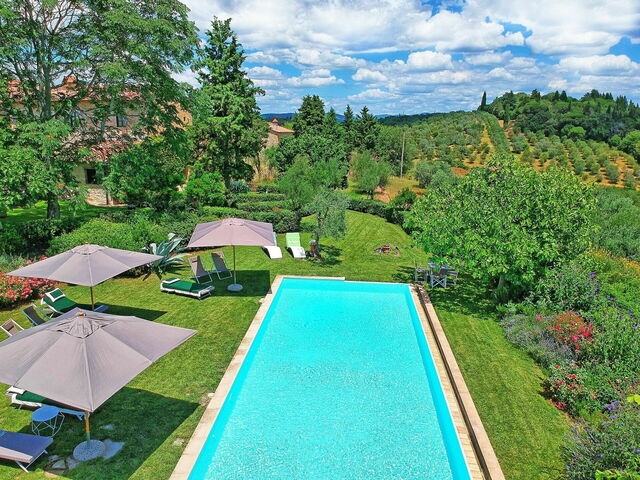
The Story of Villa Sonia: a Tuscan Gem of Elegance and Tradition
Nestled in the heart of Chianti, Villa Sonia is more than just a property—it’s a timeless blend of history, art, and hospitality. Located just 1 km from the charming medieval town of San Donato in Poggio, the villa was initially acquired as a result of the previous owners’ meticulous renovation efforts. It felt like a rare opportunity to preserve and enhance its beauty, and we saw the potential to transform it into the enchanting retreat it is today. Now, with the perfect combination of tradition and modernity, we welcome guests to experience the quintessential Tuscan lifestyle.
A Hidden Gem with a Unique Location
Situated between Florence and Siena, Villa Sonia offers guests a prime location for exploring Tuscany’s cultural treasures. Its proximity to renowned destinations like San Gimignano and Greve in Chianti means that guests can enjoy the best of Tuscany within a short drive. The villa’s surroundings, with vineyards, olive groves, and rolling hills, create a peaceful haven that feels remote yet remains connected to the region’s vibrant heritage.
A Fusion of Tradition and Modernity
The villa’s interiors reflect our passion for merging tradition with contemporary design. Inspired by the art and architecture of Florence and Siena, each room is a blend of classic Tuscan style—think exposed beams and handmade terracotta floors—with sleek, modern amenities. The result is a sophisticated yet inviting ambiance that honors the past while providing the comforts of today.
The Beauty Lies in the Details
Among the many unique features, we are particularly fond of the colorful handmade terracotta flooring, selected to complement the villa’s warm tones. One of our favorite pieces is a beautifully restored storage cabinet on the ground floor, a piece with elegant lines and historical charm. Each space has been carefully curated to reflect the region’s artistic flair.
The Heart of the Home: A Terrace with a View
The villa’s terrace, overlooking the verdant landscape, is where we start our mornings with coffee and end our evenings with a glass of Chianti. It’s an enchanting spot that captures the essence of Tuscan living—serene, scenic, and perfect for unwinding after a day of exploring. Guests often mention this terrace as their favorite area, where every sunset feels like a private spectacle.
What to Expect as Our Guest
Our villa offers a unique layout that includes a main building, a separate apartment, and two additional units, making it perfect for groups seeking a combination of shared spaces and privacy. Each area has been thoughtfully designed to cater to both intimate gatherings and quiet moments of solitude. Whether it’s cooking together in the spacious kitchen or retreating to a quiet corner to read, guests can enjoy the villa at their own pace.
One Delightful Surprise Awaits
We love surprising our guests, but revealing too much would spoil the fun! Let’s just say that wine enthusiasts will be thrilled to find a small yet exceptional wine cellar featuring selections from our friends. It’s one of those hidden gems that adds a touch of exclusivity and joy to the stay. As we like to say: if we told you everything, where would the surprise be?
For more details about Villa Sonia, its amenities, and availability, you can visit the official page
Read More
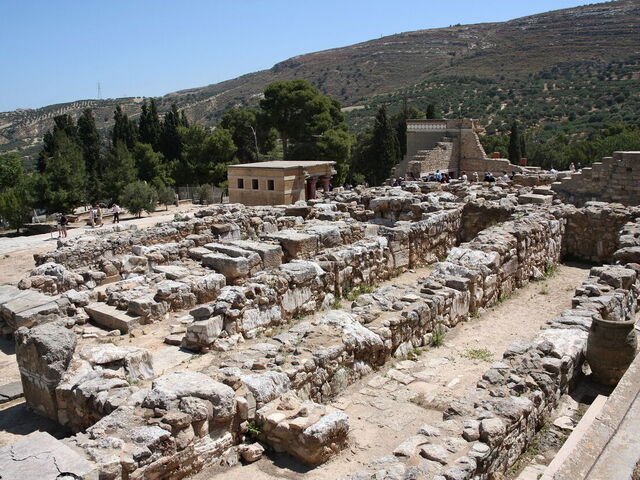
Greek history has always been fused with mythology, creating a unique culture. The existing myths and legends weave together an incredible story. Today we will tell you the legend of the Knossos labyrinth, also known as the Minotaur labyrinth.Are you ready to jump in to this magnificent legend? Get ready to discover all the details of the Minotaur Labyrinth of Knossos!THE PALACE OF KNOSSOS Let’s start with recent history: the Knossos Labyrinth was excavated at the beginning of the 1900s by the English archeologist Sir Arthur Evans. He uncovered an immense palace dating back to 2000 BC totaling 22,000 square meters, with more than 1300 rooms. The palace was used as the center of Minoan life. Unfortunately it was destroyed in about 1628 BC following an earthquake caused by the volcanic eruption of Thera, or Santorini. It was then rebuilt in the following years on the same foundations as the ancient palace. Probably the legend of the Minotaur doesn’t refer to a labyrinth outside of the palace, but rather to the palace itself, because its rooms and corridors were so dense that it seemed like a labyrinth.The Palace of Knossos sits on Kephala hill, a few kilometers from Heraklion. It is one of the main tourist attractions on the island of Crete. It has not just the remains of structures, but also magnificent mosaics and frescoes of Minoan civilization.THE LEGEND The story of the Minotaur begins when Minos, King of Crete, asked Poseidon, god of the sea, to give him a large white bull. Minos was to sacrifice the bull in order to show citizens of Crete his worth as King, and how much the gods esteemed him. But when Minos received the bull, he decided to keep it for himself. This annoyed Poseidon, and so he made Minos’s wife Pasiphae fall in love with the bull. The Minotaur was born from their union: an insatiable beast who soon would eat only human flesh. To contain the Minotaur’s violence, Minos closed him inside the famous Labyrinth. It was built by Daedalus and Icarus, who remained trapped inside and escaped by building wax wings. It happened that Minos’s son Androgeus was killed by Athenian warriors, jealous of his strength and athletic ability which led him to win every competition. In revenge, Minos forced Athens to send seven young men and seven maidens every year to be fed to the Minotaur.Theseus, son of Aegeus, King of Athens, decided to put an end to this punishment and leave along with the children sent to Crete, in order to kill the Minotaur. When Theseus arrived in Crete, Ariadne, daughter of Minos, fell immediately in love with him and asked Daedalus to help her find the Minotaur in the Labyrinth. Daedalus showed Ariadne the way and suggested she give Theseus a red thread to unwind when setting out in the labyrinth in order to find the way back (“Ariadne’s thread”). Theseus found the Minotaur and killed him after a violent battle, and also saved the other children. He prepared to return to Athens, bringing with him Ariadne and her younger sister Phaedra.From this point on, there are many existing versions of the story that tell of Ariadne being abandoned on the island of Naxos, that she fell asleep when they stopped to rest. Some say that Dionysus, god of music and wine, forced Theseus to leave Ariadne there so that he could marry her himself. Others say that Theseus forgot about her, and when Dionysus saw Ariadne so upset, he decided to marry her to end her suffering. In any case, the legend of Theseus, the Minotaur and Ariadne ends in tragedy: Theseus had promised his father Aegeus that if he succeeded in his endeavor he would change the sails on his ship from black to white. But on his way home, Theseus forgot to change the sails. When Aegeus saw the ship with black sails on the horizon, in despair he threw himself in the sea and died. That sea was named after him and became the Aegean Sea.If you would like to visit the Knossos Labyrinth and see this important archaeological site up close, book a trip to Crete! We recommend taking a look at our vacation villas on the island of Crete, such as Villa Eftychia, Villa Sevi Grande and Villa Romantic Sevi, for a dream stay!
Read More

Few historical characters boast a story as fascinating, complex and adventurous as San Nicola. This famous figure belongs to Italian popular culture and has become famous in the whole world, although not everyone knows his real name.
Would you like to discover more about it? Come with us along this amazing time travel to discover one of the oldest and most interesting Italian traditions!
Between the 4th and 5th century, San Nicola was the bishop of Myra, a town located in the current Turkey. His biography is intriguing and unique: he is considered a Saint by Catholics and Orthodoxes, his remains are conserved both in the Cathedrals of Bari and Venice, he lived during the late Roman Empire but is very popular nowadays in the US... how is all of this possible?
Also, there is no certainty about his real name either: is it Nicola, Niklaus, Nicholas, Nicolas or Santa Claus?
Actually, this is the name that most of the people know. Thanks to Coca Cola's sponsorship, Santa Claus entered children's collective imagination as a magic man who delivers gifts riding his flying sled with reindeers.
So... what is the true story of San Nicola?
According to legends, the bishop of Myra deeply loved young kids and children, who helped in various ways including saving a girl from prostitution and bringing children back to life after violent deaths. Therefore, San Nicola is a benefactor and a very positive character for children professing different religious faiths and coming from different parts of the world.
After a life full of adventures, his remains could not have a different destiny. In the 10th century, his rests were stolen and brought to Bari, where Nicola became the city Patron Saint. Few years later, some Venetian merchants attempted another theft but could not transport more than some bones to Venice's Cathedral, where "San Niccolò" became the protector of Serenissima's fleet. In the 11th century, one of his phalanxes was moved to Lorraine, where a miracle occured and lead to the spreading of his fame throughout Europe, wherehe became known as Saint Nicholas. Pilgrims then exported San Nicola's cult no the "New World", where he progressively assumed the positive value of what was considered as the main American Christmas symbol.
For these various reasons, Bari and Venice linked their history and traditions to San Nicola's character, enriching their incredible cultural heritage.
This is definitely another good reason to visit these two splendid cities in occasion of your next Italian holiday! Discover our holiday rentals in Veneto and in Puglia to choose your favourite for the vacation you have always dreamed of!
© Alice Pilastri
Read More
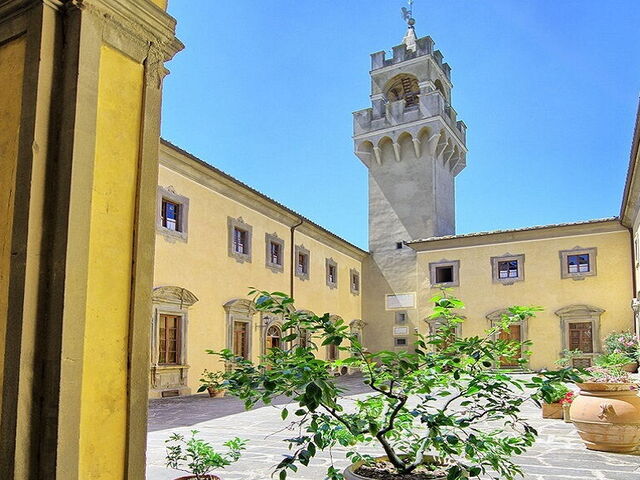
The Castle of Montegufoni is a splendid property to rent in occasion of a holiday in Tuscany. Its excellent position allows to reach some of the most beautiful tourist destinations in Central Italy and the panoramic view is so beautiful that it takes the breath away. This magnificent castle can really turn each stay into a fairytale!
Are you curious to discover the history of this palace? Then continue reading!
The building was built in the 10th-11th century by the Florentines. In this period, the feudal system was still on force and it was based on the appointment of lands to religious and aristocratic authorities. The lord who managed Montegufoni Castle was a member of the Ormanni family and the choice of the castle was due to its excellent, strategic position. A small village started to enlarge around the castle and the inhabitants mainly dedicated themselves to agricolture, in order to exploit the local resources. However, in 1135 the Castle was totally destroyed by a Florentine army attack and it was left in ruins for centuries. This four towers-fortress doesn't exist anymore, but some of its rests are still visible in the castle's garden.
It was not before 1160 that the castle was bought by Gugliarello Acciaioli, whose family managed the building for centuries and financed its reconstruction, transforming it into a noble fortress. Thanks to their huge wealth, they also enlarged its spaces building a central structure and seven minor buildings, which later got the name of "the seven old villas of the ancestral Castle of Montegufoni”. In 1386, Donato di Jacopo started building the majestic stone tower and the family commissioned works like the Court of the "Dukes of Athens" and its entrance staircase. The bell tower was then restored in 1546 and the architect was visibly inspired by the Arnolfo di Cambio's tower for Palazzo Vecchio.
In the 17th century, Montegufoni acquired its final aspect: the seven properties were reunited, the halls were decorated by some splendid frescoes and the garden of the Cardinal, the internal Gallery, the Assunta Chapel and the wonderful "Grotta di Latona" were added.
At the beginning of the 20th century, the Castle was bought by an English lord called Sir George Sitwell, who had fallen in love with its charm, and his son Osbert Sitwell commissioned the illustration of some halls with Gino Severini's "Maschere". Later, during the Second World War, few people know that Montegufoni was chosen to host some valuable works of Renaissance art which were transferred here from Florence's main museums. Masterpieces such as "The Spring" by Botticelli, Giotto's “Madonna di Ognissanti” or Ghirlandaio's ’”Adoration of the Kings" were located in its beautiful halls until 1945, when they were officially returned to the Uffizi Galleries.
Finally, in 1972 the property was sold to Posarelli family, who still manages the castle. Montegufoni is now a luxury holiday accommodation in Chianti which has been divided in 39 wonderful apartments to grant a memorable vacation experience to its guests.
Discover the beauty of this incredible place during your next trip to Tuscany! Book one of its splendid apartments choosing your favorite on our website!
© Alice Pilastri
Read More

Yes, we all know that Italy is famous to be the country of pasta, gelato and pizza. A great part of Italian culture is linked to culinary traditions, which are different in every region and appreciated in every part of the world.
But what’s the real history of pizza? What is it named after and when was it cooked for the first time?
The origin of this dish is primordial: we can talk about “pizza” in the moment when men started to cook narrow slices of unleavened bread on hot stones. The dough was made with water and squashed barley grains, so it took the name of “pizza” as it derived from the Latin “pinsere” which means “to squash”, “to beat”.
Egyptians used yeast for the first time and this new type of preparation started to be used as currency of exchange in international trades.
The following developments took place in Southern Italy in order to make the “pizza” tastier. Initially, cooks prepared a flatbread pizza with garlic, lard and salt, then it was modified using oil, cheese and some aromatic herbs, such as basil. Moreover, another kind of “schiacciata” called “cicinielli” was born in this period, which contained portions of fish.
The tomato sauce was introduced following the importation from America and the distribution by Spanish in Europe. As it is stated by a 1778 document called “Il Cuoco Galante” by Vincenzo Corrado, the sauce was firstly used to accompany macaroni, and not pizza.
The first pizza with tomatoes dates back to 1840-50, when it was added to a pizza with buffalo mozzarella.
The official launch of this dish occurred in 1889, when Don Raffaele Esposito and his wife Donna Rosa Brandi were invited to the court of the King of Italy Umberto I and Queen Margherita, who wanted to taste their famous pizza. They prepared three well-known types of it, which were the pizza “alla Vasenicola” (with lard, cheese and basil), the pizza “alla Marinara” (with tomato sauce, garlic, oil and oregano) and the pizza “Margherita” (with tomato sauce, mozzarella, oil and basil), that was named after the Queen. The colors of the dish were the same of the Italian “tricolore” flag, so pizza became the symbol of this country in the world.
After 1889, the dish became very popular in Italy and abroad, especially in America where emigrated “pizzaioli” imported it at the beginning of the 20th century. Although many varieties of pizza have spread in the last decades, the authentic and traditional recipe is the Neapolitan one, where the dough is soft and narrow with high borders called “cornicione”.
So, if you would like to taste the “real Italian pizza”, we sincerely suggest you visit Naples and Campania! Choose one of our properties in the region, near Naples and Amalfi Coastline, and choose your favorite!
Read More
Some weeks ago, a National Geographic troupe arrived at the Montegufoni Castle to investigate on the story behind the important Renaissance masterpieces that where hidden here during the Second World War. A whole episode, the third of the "Nazi World War Weird" show, was dedicated to our wonderful castle and it will be soon broadcasted in worldwide National Geographic Channels.
"As the chaos of World War II engulfs Italy, a British officer makes a shocking find; a 900 year old castle near the front line still holds a collection of priceless works by some of Italy's greatest Renaissance masters. But who put the masterpieces there and how did they survive the battle raging less than 2500 yards away?"
Don't miss it! Check your country's TV schedule:
WATCH IT ON...
National Geographic Italia: "Misteri Nazisti: La fortezza italiana"
Thursday 22nd December at 15:25
National Geographic UK: "Nazi Weird War Two: Secret Art Fortress"
Tuesday 17th January at 20:00
National Geographic South Africa: "World War Weird: Secret Art Fortress"
Tuesday 17th January at 22:50
National Geographic France: "Mystères Nazis: La forteresse aux œuvres d'art"
after Thursday 5th January
Read More