Archive for "Must See Attractions"
Planning a trip to Italy? Browse and read our useful and informative articles about the endless range of attractions and experiences in this lovely country.
Travel through the beauties of Italy with us. Visit our blog!
August 20, 2025
Florence, Europe'S Number One Destination: Discover Why It Is the Ultimate Travel Choice
Florence isn’t just a destination; it’s an invitation to pause, listen, and linger. According to Travel + Leisure in an article published on July 8, 2025, Florence stands as Europe’s top travel pick, beloved by readers who seek beauty and experiences beyond a standard itinerary. For Travel + Leisure subscribers and readers alike, Florence tops the list of favourite European cities. ( 15 Favorite cities in Europe).
The city has long captivated travelers, writers, and poets, offering an inexhaustible source of inspiration and beauty. As Henry James wrote, “Florence is the most beautiful city in the world, a place of infinite inspiration.” It was true for Mark Twain, D. H. Lawrence, Charles Dickens, and many others, who lauded its art, history, and unique charm.
What makes Florence a top travel choice in Europe, and what do travelers love about it?
Florence has long drawn travelers—both past and present—because it embodies a distilled essence of beauty and history spanning centuries, as if the Renaissance were a continuous study in culture. It’s not merely a sight to behold but a destination to feel with every step, where every street invites curiosity and discovery. In the Romantic era, the city’s dense collection of masterpieces, its stone-lined streets, and the sites where art and conversation intertwined drew admirers. The cultural atmosphere—alive in cafés, theatres, and literary salons—paired with a palpable sense of rebirth and memory, rendered Florence a living history workshop. To many, Florence remains an inexhaustible muse, capable of turning any visit into a journey into the soul of Western civilization.
Florence’s masterpieces are still everywhere today: visible on streets, squares, and palaces, and echoed in the courtyards, alleys, and the air that feels steeped in thousand-year memories. Walking the historic center is like strolling through an open-air museum, where every corner tells a story and every photo captures a fragment of perfection. But the city is more than art: Tuscan cuisine, bustling markets, world-renowned shops, secret gardens, and a richly varied cultural calendar all contribute to a destination that satisfies diverse tastes and offers both sensory and intellectual delights at every turn. Summing up Florence’s wonders is a challenge; this must-see list by theme aims to guide while recognizing that any snapshot remains partial and that Florence offers endless paths of discovery.
The Uffizi Gallery
Museums: The Uffizi Gallery
Florence’s art treasures are everywhere, and none stand out more than the Uffizi Gallery. Inaugurated in 1581 and designed by Giorgio Vasari for Cosimo I de’ Medici, the Uffizi is among the world’s most important artistic institutions and helped establish Florence as the Renaissance’s capital of painting. The collection spans masterpieces by Botticelli, Leonardo, Michelangelo, Titian, Raphael, Caravaggio, and Rubens, offering a deep dive into history, religion, and human beauty. For the best experience, book your tickets online to skip the queues and choose morning or late afternoon visits. Plan about 1.5–2 hours for a focused tour, or more if you want to explore in depth. The route begins with iconic works like The Birth of Venus and The Primavera, then moves to less crowded pieces that offer a thoughtful interpretation of the Renaissance.
The Duomo, Giotto's Bell Tower and the Baptistery
Monuments: The Duomo, Giotto's Bell Tower and the Baptistery
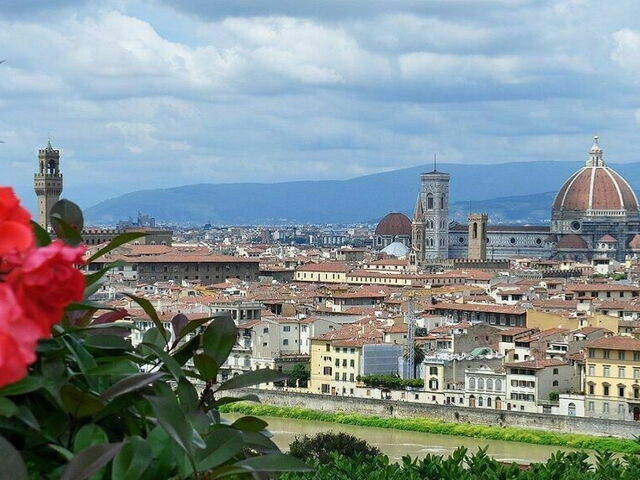
Florence’s Cathedral complex is a must-see for any visitor, especially in a single-day itinerary. The Cathedral of Santa Maria del Fiore, crowned by Brunelleschi’s iconic dome, rises above the city alongside Giotto’s Bell Tower and the Baptistery of San Giovanni (The Dome of Florence). This ensemble, the symbol of the Renaissance, dominates Florence’s skyline, and climbing the dome offers a breathtaking view of the historic center. Next to it, Giotto’s Bell Tower dazzles with marble decorations and sweeping city vistas, while the Baptistery captivates with brilliant mosaics and the legendary Porta del Paradiso. Together, they form a seamless itinerary that showcases Florence’s extraordinary art, engineering, and timeless beauty.
The Boboli Gardens
Parks: The Boboli Gardens
Florence’s historic streets invite leisurely discovery, while you’re enjoying an ice cream (Gelateria Grom). Along the way you’ll encounter iconic monuments such as the Ponte Vecchio, Palazzo Pitti, the Church of Santa Maria Novella, the Church of Santa Croce, and Palazzo Vecchio. Even admiring them from the outside offers a unique, unforgettable experience. For those who prefer outdoor time, the Boboli Gardens behind the Pitti Palace provide a Renaissance-era park setting with panoramic terraces, statues, fountains, grottoes, and sweeping views of the city. Its avenues, fountains, and hidden corners offer a green, atmospheric retreat ideal for contemplative walks and dramatic city vistas.
The San Lorenzo Market
Cuisine: The San Lorenzo Market
San Lorenzo Market (www.mercatocentrale.it) is one of Florence’s liveliest centers in the heart of the city, located between the SMN railway station and the historic market district. Founded in the 19th century as a food market, today it brings together stalls, shops selling Tuscan specialties, and small workshops where you can feel the air of local tradition. Fruit and vegetable stalls burst with seasonal produce and color, but the true draw is the culinary bounty: cheeses, cured meats, extra-virgin olive oil, truffles, porcini mushrooms, and a wide array of regional specialties such as new olive oil, cantucci biscuits, and local desserts. Nearby shops and taverns offer traditional dishes and authentic tastings, making this area an ideal stop to savor local cuisine in a lively, authentic setting.
Florentine Craftsmanship
Fashion and Shopping: Via de’ Tornabuoni e Oltrarno
Florence fashion is a journey through high-end craftsmanship, textile history, and brands that have shaped the city’s style. Visitors can enjoy luxury boutiques as well as authentic experiences focused on leather, suede, and niche prêt-à-porter. Strolling along Via de' Tornabuoni and the surrounding streets, amid international boutiques and historic ateliers, you’ll feel Florentine elegance and discover the city’s keywords: luxury, craftsmanship, and timeless style. In the Oltrarno district, you’ll find numerous artisan workshops—leather studios, leather goods, jewelry, and bespoke clothing. Visitors can tour ateliers, watch the manufacturing process, and even order unique pieces.
Culture: The Pergola Theatre
Florence’s Teatro della Pergola ( www.teatrodellatoscana.it) is a must-visit cultural landmark in the heart of the city. One of Italy’s oldest and most captivating theatres, it was founded in 1655 at the request of the Medici family. It began as an open-air theatre and over the centuries was transformed and restored, arriving at its current configuration in the 19th century: a grand interior hall, a solid stage, and a stalls area welcoming audiences of all ages. The theatre’s international lineage—hosting artists and companies from across Europe—has helped cement Florence as a cultural hub not only of the Renaissance but also of the contemporary world.
Discover our villas near Florence
Read More
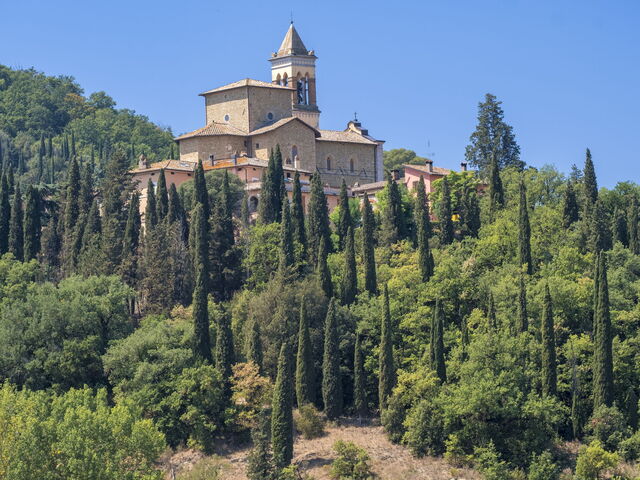
Solomeo, a charming medieval village located near Perugia, embodies the agricultural renaissance of the 12th century, when land reclamation brought life back to a previously abandoned valley. One of the most beautiful villages in Umbria and among the most beautiful in Italy, this ancient settlement, founded on a gentle hill, was chosen by ancient farmers for the purity of the air and the beauty of the landscape.
The History of SolomeoThe traces of Solomeo's past date back to the Middle Ages, when the village developed along a road connecting Perugia to Castiglion del Lago and Chiusi. In 1361, the inhabited nucleus of "Villa Solomei" included a palace, twelve "domus," two small farms, and the Church of San Bartolomeo. In 1391, the inhabitants decided to fortify the village, promoting the construction of the castle, recorded in the city council minutes as an initiative of the owner of the main palace, Meo "Iohannis Cole." During the Renaissance, Villa Solomei experienced significant demographic expansion, as evidenced by the Camposanto and the Antinori villa from the 18th century.
Brunello Cucinelli and the Renaissance of SolomeoIn 1985, Brunello Cucinelli made a bold move by choosing to settle in Solomeo and concentrate his life and business there.
Who is Brunello Cucinelli?Born in Castel Rigone to a farming family, Cucinelli experienced the joys and hardships of rural life, an experience that shaped his moral values and commitment to respecting people. After studying and working as a surveyor, he began his career in the fashion industry, founding Brunello Cucinelli SpA in 1978 with the aim of producing colorful cashmere sweaters in line with contemporary taste.
In the following years, the brand gained international recognition, becoming synonymous with classic and sartorial elegance. Beyond fashion, Cucinelli is distinguished by his social and environmental commitment, always striving to reconcile profit with moral dignity. Numerous awards and honors testify to his contribution to the industry and society.
But his vision extends beyond the fashion world: Solomeo, the village where he relocated his company's headquarters, has become a symbol of his ideal of harmony between man and nature. Here, through the Brunello and Federica Cucinelli Foundation, he has promoted cultural and social projects, transforming the village into a utopia of beauty and integration.
In summary, Brunello Cucinelli represents not only an icon of Italian fashion but also an example of ethical entrepreneurship and commitment to a better world, where beauty meets goodness.
Why visit Solomeo? What to see in Solomeo, the village of cashmereThe Foro delle ArtiThe beating heart of Solomeo is the Foro delle Arti, a highlight that combines tradition and modernity. Inaugurated in 2001, the Foro revolves around the Teatro Cucinelli, a Renaissance architectural gem hosting prestigious cultural events. The Amphitheater, in front of the Theatre, is the ideal place for festivals and summer performances, while the Philosophers' Garden offers a space for contemplation and reflection immersed in nature.
Accademia Neoumanistica Aureliana and the Universal LibraryThe Accademia Neoumanistica Aureliana is a place of meeting and culture, enriched by a library that will soon be enhanced by the Universal Library of Solomeo, an ambitious project promoted by the Brunello and Federica Cucinelli Foundation, symbolizing the community's commitment to promoting knowledge and culture.
Explore the Villas of Solomeo and Umbria
Discover the villas offered around Solomeo, where comfort and elegance blend with the charm of a historic village:
The luxury villas of Solomeo offer a unique experience of relaxation and beauty, immersed in the tranquility of the Umbrian countryside. Villa Uccellaia is an oasis of peace with a panoramic view of the surrounding hills, while Villa Acquaviva offers luxury and comfort in an elegant and refined environment. The splendid Villa Apollinare, with its classic style and well-kept gardens, is the perfect place for an unforgettable vacation. To book one of these exclusive luxury villas in Solomeo, visit our website and discover all the available offers. Enjoy your relaxation!
Read More
© Rebecca Taizzani
Crete is a captivating Greek island known for its stunning landscapes, charming villages, and rich cultural heritage. Whether you love beaches, history, or gastronomy, this sun-soaked destination offers something for everyone. As the largest of the Greek islands, Crete is an ideal choice for a week-long escape. From ancient sites to pristine coastlines, there is no shortage of things to see and do. This article presents a complete itinerary for a week in Crete, helping you make the most of your time on this remarkable island.
Day 1: Explore Heraklion Begin your Crete journey in Heraklion, the island’s capital. This city blends ancient heritage with modern life and offers a concise introduction to Crete’s history, culture, and gastronomy. Highlights include the Heraklion Archaeological Museum, which houses the world’s richest collection of Minoan artifacts and provides deep insights into this ancient civilization. Other must-see sites are the Koules Fortress, a Venetian coastal fortress with spectacular harbour views, and the 1866 Market, where you can sample local produce. Don’t miss St Mark’s Basilica and its art gallery, as well as the Historical Museum of Crete for a broader narrative of the island. End the day with a sunset stroll along the seafront, a quiet moment at the Cathedral of Agios Minas, and a meal at a traditional taverna to taste regional specialties.
Day 2: Visit the Palace of Knossos About 6 km from Heraklion, the Palace of Knossos is a centerpiece of ancient Minoan civilization, dating to around 1700 BC. This expansive site covers roughly 22,000 m² and comprises a central courtyard, royal quarters, administrative rooms, and craft workshops. Visitors can explore the ruins, admiring the architecture and notable frescoes, including those in the Throne Room and the Queen’s Apartments. Knossos is also linked to myths such as the Minotaur and the labyrinth designed by Daedalus. Early discoveries began in the 19th century with archaeologist Sir Arthur Evans, whose reconstruction work remains a topic of debate. Today, Knossos offers a compelling glimpse into the history and culture of one of antiquity’s most influential civilizations.
Day 3: Towards Chania Travel along the scenic northern coast to Chania, a city where Venetian, Ottoman, and Arab influences shape a rich cultural tapestry. Its cobbled streets, Venetian harbour, and the iconic Egyptian Lighthouse welcome visitors. Explore the Jewish and Muslim quarters, admire historic architecture, and visit museums and seaside tavernas. Highlights include the Egyptian Lighthouse, Firka Fortress, and Neoria (the old Venetian shipyards). Don’t miss Splantzia Square, the heart of the Turkish quarter, as well as Chania Cathedral and the Folklore Museum, which together illuminate Crete’s past.
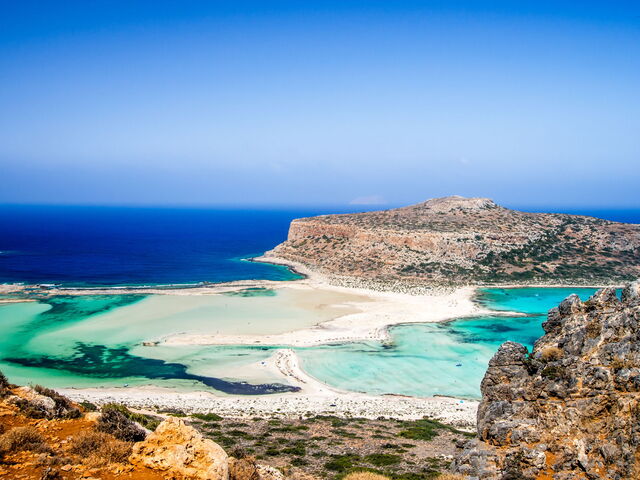
Day 4: Discover Elafonissi Beach Embark on a day trip to Elafonissi Beach on Crete’s southwest coast. Known as the "Caribbean of the Mediterranean", its white and pink sands meet turquoise waters. The main beach offers sun loungers and parasols, while quieter coves and free beaches invite exploration. Opposite the shore is a small island also called Elafonissi, connected at low tide by a sandy isthmus. The island features tranquil bays, unspoiled nature, a lighthouse, and a chapel. The area is a protected habitat for loggerhead sea turtles and hosts diverse plant life. Conclude the day with a sunset that paints the sea with vibrant colors.
Day 5: The Samaria Gorge Continue along the southern coast to the Samaria Gorge, a premier trek for nature lovers and one of Europe’s longest canyons. Located in the White Mountains National Park, the gorge was carved by the Tarraios River over millennia, reaching depths of up to 600 metres and narrowing to about 3 metres at the Portes crossing. The full-day hike requires solid preparation and reveals diverse flora—with more than 450 plant species—and the wild kri-kri goat, the park’s emblem. The route starts at Xyloskalo, offering expansive views, and ends in Agia Roumeli, where you can relax and sample local dishes. As a UNESCO Biosphere Reserve, Samaria Gorge combines adventure with natural and cultural significance.
Day 6: Discover Loutro Head east to Loutro, a secluded coastal village where nature and tranquility define the experience. Accessible only by sea or via a hiking path, this car-free settlement offers a sense of remoteness and authenticity. White-washed houses overlook clear blue waters, creating a postcard-worthy scene. Enjoy time on nearby beaches such as the central beach and Finikas Beach, dine on fresh seafood at local tavernas, and wander along quiet paths under a star-filled sky. Loutro’s pedestrian-friendly streets invite relaxed exploration, making it an ideal stop for those seeking a serene, nature-rich getaway.
Day 7: Matala Matala, a charming village on Crete’s southern coast, draws visitors with its unique blend of beauty and history. At its heart is Matala Beach, known for crystal-clear waters and cliffs carved with famous caves. These caves were a bohemian retreat in the 1960s and 1970s, attracting artists and musicians such as Bob Dylan and Janis Joplin, and they remain a window into that era. Explore the lively village to feel the spirit of its past, and consider attending the Matala Beach Festival each June, which celebrates the area’s music and arts heritage. For those seeking nature and adventure, a visit to Red Beach—with its red sand and turquoise waters—offers a pristine coastal experience nearby. Matala combines relaxation, culture, and scenic beauty, making it a must-visit destination for travelers exploring Crete.
Are you curious to visit this wonderful island? Below you will find some of our beautiful villas in Crete
Read More
August 11, 2019
8 Quiet Greek Islands to Choose for a Relaxing Holiday
Who wouldn't like to go to Greece? This splendid destination in the Mediterranean offers plenty of cities and islands to visit during a memorable holiday. Turqoise sea, fairy villages and dream beaches are exactly what you are looking for to enjoy your summer vacation!
However, if you are searching a little paradise with calm and tranquillity, you have to choose your destination with care. Visiting an islands full of young holiday-goers and crowded beaches is exactly what you have to avoid.
That's why we recommend the best Greek islands to choose for a relaxing holiday at sea, where you can still spot deserted beaches and enjoy the quiet that these unknown paradises still conserve. Discover more about them and don't forget to have a look at our properties for rent in Greece!
1. Folegandros
Folegandros is a tiny island included in the Cyclades archipelago. Due to its small dimensions, it can also be traveled by foot, avoiding the stress of renting a car. It is considered one of the Greek islands less affected by mass tourism as it doesn't have an airport. Actually, it can only reached by sea from some close islands, included Santorini and Mykonos.
2. Iraklia
Iralkia has a large extension, but its inhabitants are only 115! This is the perfect place for travelers looking for a holiday in ancient Greece, in close contact with its culture and traditions. Also, it is the right destination for those who love walking along solitary paths and spending lazy days on deserted beaches. All you will find is complete peace and tranquility in a stunning natural scenario! Iraklia offers two small villages called Agios Georgios and Panagia where there are some pensions, three taverns, a bar, a supermarket and a tourist office.
3. Skopelos
Have you ever seen the movie "Mamma Mia!"? The beautiful location where it was filmed is Skopelos, a large island of the northern Sporades archipelago. As it doesn't have any airport, it is not so popular among tourist destinations in Greece. However, visitors can get to Skiathos by plane and then take a ferry to reach Skopelos in less than an hour. This green islet is considered one of the most beautiful places in the world, as its lovely beaches present a unique beauty.
4. Fourni
Samos, Patmos and Fourni are the main islands of a wonderful archipelago located in the Aegean Sea. While the first two islands are well-known to mass tourism, Furni is a few inhabited island found outside the common routes. Time seems to have stopped in its village and port, where the charm of the authentic Greece is still preserved. This is the perfect destination for a relaxing break!
5. Ithaca
Despite Ithaca's fame, which is linked to the Homeric narratives about Ulysses, it is still an unknown tourist destinations. Those who have a great interest in Greek history, archaeology and mythology will simply fall in love with this island and its precious historical heritage, as there are plenty of things to see and visit. However, this pristine locality also offers breathtaking views, stunning isolated beaches, small fishing villages and several monuments that will win the heart of all its visitors.
6. Paxi and Antipaxi
Paxi and Antipaxi are part of the Ionian Islands and they are two gems immersed in a natural paradise. Their coast features some breathtaking rocky cliffs that alternate with tropical beaches. Instead, the inland is made of infinite olive groves, vineyards and a lush vegetation growing until the shore: don't forget to taste the exceptional wines produced locally! A holiday in Paxi or Antipaxi is a charming experience to live at least once in your life, which will make your summer holidays in Greece unforgettable.
7. Amorgos
Amorgos overlooks the blue of the Aegean Sea and is part of the Cyclades archipelago. A visit to this corner of heaven will be like a journey back in time, as its beauty is still untouched. You will discover a beautiful mix of centuries-old traditions, ancient paths and remote villages that will make you fall in love. Also, enjoy a swim in the crystal clear waters of Amorgos, reach its secret beaches and taste some local specialties looking at the unique panoramic views extending all around you!
8. Karpathos
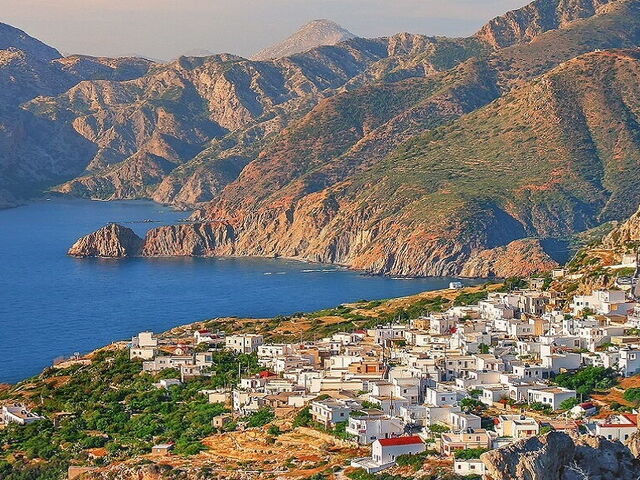
Finally, the island of Karpathos is a gorgeous corner of paradise in the Aegean Sea. Shaped by wind and centuries-old traditions, this Greek atoll conceals the secrets of ancient civilizations in its citadel, caves, churches and authentic customs. This is what makes the island so unique, although the spectacular color of the sea and the incredible beaches always stun its first-time visitors with their beauty. If your idea of holiday is a perfect mix between relax, nature, beaches and culture, then hurry up and start planning your trip to Karpathos!
© Alice Pilastri
Read More

January 19, 2019
All about Carnival Celebrations in Greece
February is the month of Carnival in Greece and it’s time to get ready for celebrations! Greece will surprise you with its huge celebrations taking place in villages and towns, where thousands of dancers and masked participants have fun together in the name of joy and happiness. There is no better period to enjoy the cheerful Greek life: get accompanied by traditional music and by your fellow masquerades and taste the local food specialities in the best city bars and restaurant!
Do you want to know more about Greek Carnival and how it is celebrated? Read more and take part to the next events booking an unforgettable holiday in Greece!
The name of Carnival in Greece is “Apokries”, which means “abstention from eating meat”. The festival starts ten weeks before the Orthodox Easter and ends with the beginning of Lent, so it takes place on the three weeks before the so-called “Clean Monday”.
Actually, Greece was Carnival’s homeland. The tradition began in Ancient Greece, where people celebrated the god of wine Dionysus with pagan rites that were already associated with earthly pleasures and transgressions. Nowadays, Carnival has adopted a deep religious meaning and it is celebrated in almost every country of the world!
In Greece, the first week of Carnival is called “Profoni” and starts with the “opening of the Triodon”, an event referring to the three odes sung in Orthodox churches before Holy Saturday.
The second week, called “Kreatini”, is when Greeks cook roasted meat in every house, filling streets’ air with a delicious, irresistible smell. On Thursday, called “Tsiknopempti”, families and friends gather to have a nice meal together, dancing and drinking wine listening to traditional music.
With the beginning of the third week, called "Tyrinì", people are no longer allowed to eat meat and “Cheese Week” officially starts! These will be the last days of parties and celebrations, as the following Monday marks the beginning of Lent period.
"Kathara Deftera” or “Clean Monday” is a day of purification and sobriety that puts a definite end to the excessive Carnival celebrations. However, Clean Monday is a festive day symbolizing harmony, hope and happiness: traditionally, families spend this day out to have a picnic together, tasting some special foods such as “lagana” bread, “taramosalata” sauce or “halvas” cake. Also, children make their kites fly in the blue sky, as this game is a symbol of the positivity associated with this day.
As in other countries, Carnival is a wonderful occasion in which children and adults can dress up in fanciful ways, wearing masks and costumes. Although Carnival is celebrated everywhere in Greece, usually with the symbolic “Carnival King” figure, there are some towns that organize it in a very special way. Let’s discover where they are!
One of the most singular events is the one taking place in Patras, hosting a one-week fantastic party featuring colorful floats, dancing parades, firework shows and traditional events like the “chocolate battle”. This is the largest of its kind in Greece and one of the biggest of Europe!
Another nice place to visit in this occasion is Rethimno, a small town organizing a humoristic Carnival with a unique Venetian style.
Besides, in Spiros men usually dress up as goats to take part to the singular “Goat dance” in the main streets, while the celebration taking place in Naoussa is beautifully different from all the others, as it’s dedicated to freedom and independence.
Take part to the next Carnival celebrations in Greece! Check out our selection of holiday rentals in Greece to book your favourite one and spend a memorable stay in this beautiful country!
© Alice Pilastri
Read More