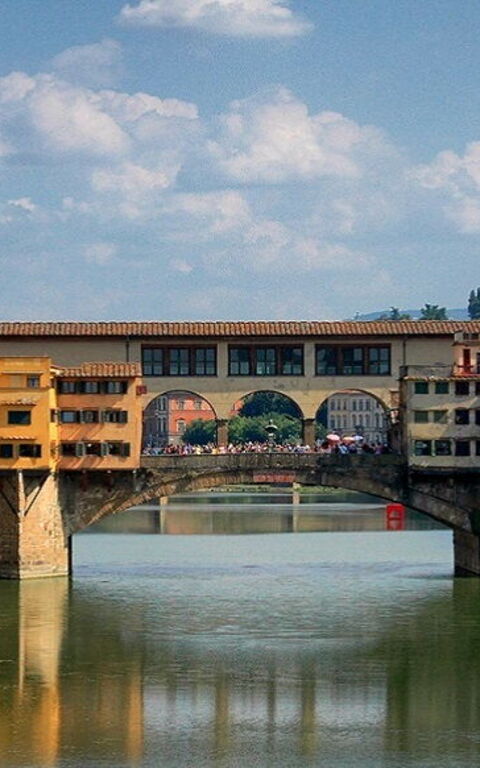

Florence narrates a century-long story to all its visitors through statues, buildings, museums and other incredible beauties. This city founded in ancient times and homeland of world-famous poets and artists was flagellated by a violent civil war for years.
Its own citizens sided with one of the two factions called “Guelfi” and “Ghibellini” and the clash soon radicalized producing effects which echoed until today. Think about the rivalry between the cities of Pisa and Florence: it’s simply due do the fact that one was Guelph, while the other Ghibelline!

The origin of factions’ name is German, as it reminds how the supporters of Welfen and Hohenstaufen dynasties were called. These families competed to win the vacant throne of the Sacred Roman Empire, which was assigned in 1152 to Frederik I of Hohenstaufen, who reduced the social tension as he was also related to the Welfens. However, his anti-ecclesiastic, anti-roman and anti-municipalities politics provoked a strong reaction of Italian cities in defense of their new communal reality. At the same time, Pope Alexander III linked the personal war against Frederik I to the local battles to safeguard cities’ autonomy.
This caused a sharp social division between the new Italian Guelfi and Ghibellini: the first stood for the Pope against the Imperial supremacy and legitimated his temporal power because he had received his authority from God, while the second supported the Emperor and didn’t accept Church’s intromission in politics. In Florence, there was also a further split between Black Guelphs(guided by Donati family and radically siding with the Pope) and White Guelphs (more moderated and gathered around Cerchi family).
A fundamental historical moment was the clash for the succession to Henry VI in 1198, when Ghibellines supported Philip Duke of Swabia and Guelphs wanted Otto of Brunswick. Many famous battles were fought, like the ones of Montaperti in 1260, Camaldino in 1289, Montecatini in 1301 or Altopascio in 1325, to some of which even Dante Alighieri took part. Being a White Guelph, even the poet suffered the sort of many other Whites and Ghibellines when Blacks took the power in Florence and condemned to death or exile their enemies.
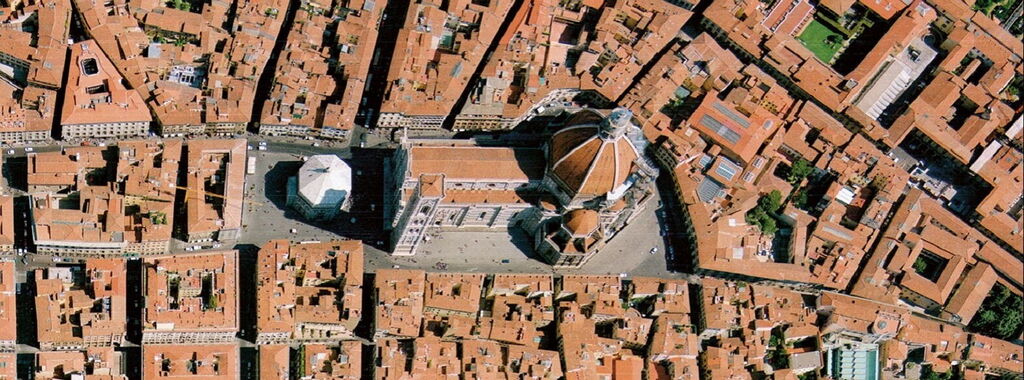
The rivalries between Guelfs and Ghibellines continued until the birth of Signorie, when the war between factions was replaced by the wars for territorial expansion. However, we cannot forget a happening in which thousands of people died, which divided an entire society and which determined the future of Florence.
You can still spot some symbolic places of these events in the old town center and we really suggest you look for them during your stay in Florence! You can search the Torre degli Amidei, where the political homicide of Buondelmonte dei Buondelmonti generated the division between factions, Palazzo Donati, where the Florentine family lived, or Palazzo Vecchio, which presents Guelph coat of arms near Ghibelline ones on its façade.
If you’re looking for a property for your holiday in Florence, check our luxury vacation rentals in the old town center or on the beautiful surrounding hills!