Archive for "Culture"
Planning a trip to Italy? Browse and read our useful and informative articles about the endless range of attractions and experiences in this lovely country.
Travel through the beauties of Italy with us. Visit our blog!
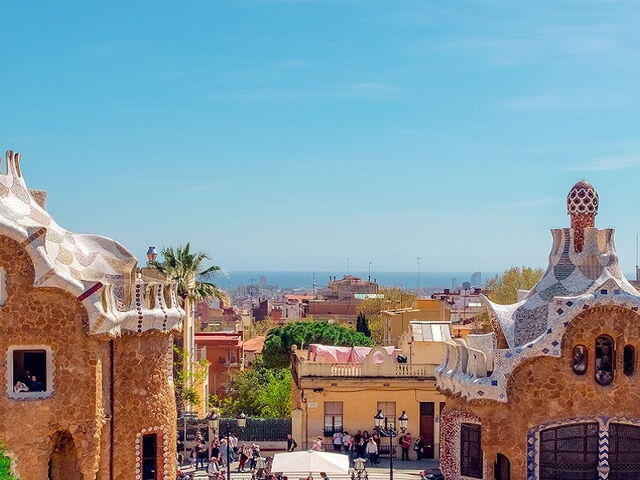
You probably think that November is not the best period to visit Spain. This is the country of beaches, sun, sea and summer, isn't it? However, you should definitely rethink your opinion: this month is full of events and nice opportunities to discover Spanish lifestyle and traditions! Also, temperatures are often quite pleasant and warm, so you might be able to enjoy some beautiful sunny days that you have been missing since September.
Here is a list of the best tourist attractions and events taking place in Spain in November, to give you an idea of the best things to do and see during your trip.
1) Drink some Orujo at Cantabria’s festival
November is the month of Orujo! This typical liquor is similar to the Italian grappa and is the protagonist of a popular festival taking place in Potes, a small town near Santander, at the beginning of November. Musical events and traditional folklore are the soul of this local festival!
2) Enjoy the warm weather and events of Canary Islands
Yes, November might be a good period to visit islands such as Tenerife, Fuerteventura or Lanzarote! On November 29th and 30th, Puerto de La Cruz (Tenerife) hosts the amazing “San Andreas Festival”, that also corresponds to the opening of wine season. Chaos, music, drinks and parties is what distinguishes this crazy celebration including the so-called “Arrastre de los Cacharros” (meaning “dragging of pots and pans”) and the “Arrastre de las Tableras (meaning: “dragging the boards”).
3) Visit Madrid in occasion of film and music festivals
Madrid is a charming and vibrant capital city with plenty of things to do. Museums, monuments, nightlife events and good restaurants always guarantee a pleasant stay to their visitors… but why don’t you take the chance of visiting Madrid in occasion of the Madrid Jazz Festival, the LGBT Madrid Film Festival and the Madrid Dance Festivals? These events will surely make your holiday unforgettable!
4) Take part to Benidorm Annual Festival
Every year, one of Spain’s major tourist destinations turns into a lively, colourful and cheerful celebration in honour of the town’s patron Saints la Virgen del Sufragio’ and ‘San Jaime Apóstol’. This huge festival takes place on the second and third week of November and includes open-air theatres, concerts, music parades and many other events that entertain people of all ages. In Playa de Poniente area, there is also a wonderful float parade with fireworks that marks the end of the Festival and the beginning of another out-of-the-ordinary celebration called “Benidorm Facy Dress”.
5) Participate to the International Sherry Week
There is no better way to discover one of Andalucia’s major culinary traditions that taking part to the famous Sherry Festival! This takes place in Jerez and offers plenty of opportunities to taste the newest wines or to discover the beautiful territory where sherry is produced.
6) Discover Granada’s historical centre
After the hottest months, Granada turns into a charming destination for your holiday escape. Streets are less crowded, and you can relax enjoying its wonderful monuments, including the imposing Alhambra. Go on a city tour and admire the amazing cultural mix while tasting some excellent food specialties!
© Alice Pilastri
Read More
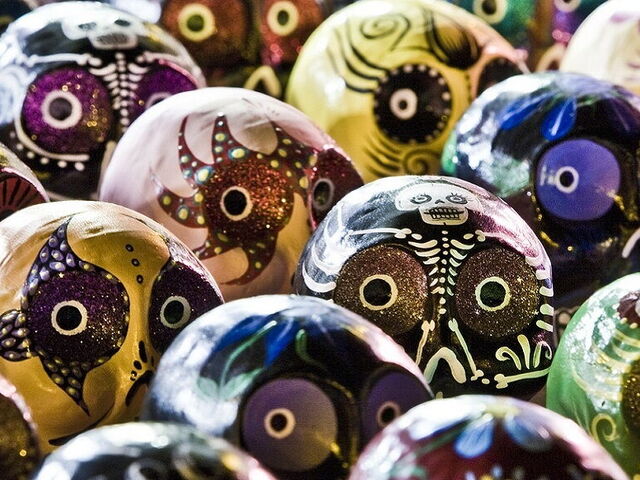
November is approaching, and Halloween celebrations are just behind the corner. The popular Disney movie “Coco” has majestically shown how Mexican people usually commemorate the dead ones and what “Dia de los Muertos” is.
But what about Spain? Is this celebration popular in the Iberian Peninsula or are there other traditions?
Actually, Spain doesn’t present festivals of this kind, as the Mexican "ofrenda para los muertos" is a tradition with Aztecan origins. Here, November 1st is simply known as "Dia de Todos los santos" (All Saints’ Day), Halloween is more like an imported Anglo-Saxon celebration often called "Dia de las Brujas" (Witches' Day) while November 2nd is called "Dia de los Muertos" (All Souls' Day). The souls of the deceased ones rise to heaven and their families visit their graves to bring gifts and to remember them. Families gather to eat abundant meals together and prepare some typical sweets such as “los huesos de santo” or “castañas asadas”. It is a religious celebration that hasn’t been influenced by Celtic traditions, as Spain has always been a Catholic country that wanted to preserve its culture.
However, some Spanish regions present unique ways to celebrate these two important days.
Let’s discover them together and don’t forget to have a look to our properties in Spain to visit this beautiful country on your next holiday!
- Canary Islands: la Noche de los Finaos
In the Canarian Islands such as Tenerife or Lanzarote, the grandmother or the mother usually tells stories about their ancestors to the other members of the family while they have a snack with fruits and typical drinks. Today, this tradition is also celebrated in the streets accompanied by music and dances.
- Galicia: Samaìn
Galician tradition is called “Samaìn” and it has Celtic origins. On this night, the limit between the world of the dead and the world of the alive disappears and people adorn their houses to keep the evil spirits away. Also, families and friends meet to celebrate “magosto”, when they cook chestnuts and tell each other stories in front of the fireplace.
- Paìs Vasco: Gaztanerre Eguna
This gastronomic celebration is dedicated to cooked chestnuts, accompanied by foods such as “motokil” or “caracoles en salsa”. While it was originally a men’s celebrations, now everybody can take part to it and families also remember the dead ones on this occasion.
- Soria: El Monte de las Animas
There is a popular legend in Soria telling that on the night of October 31st spirits, skeletons and Templars reunite on the “Souls’ Mount” which has also been described by Gustavo Adolfo Becquér in his famous novel. Usually, people tell the frightening story in front of a fireplace prepared on the top of the mountain.
- Madrid: Don Juan Tenorio
The annual representation of the play “Don Juan Teorio” by José Zorrilla is one of Sain’s best-known traditions. Thousands of people gather in the open-air square of Huerta del Palacio Arzobispal and it is broadcasted by all TV channels.
© Alice Pilastri
Read More
September 21, 2018
The Best Museums You Should Absolutely Visit in Greece
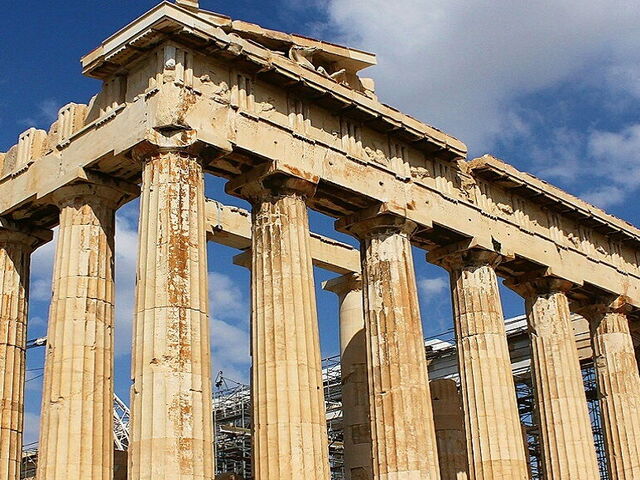
Greece is a beautiful country conserving a valueless artistic and cultural heritage. The first findings of Ancient Greek Art date back to 1000 BC, when the Cycladic and Minoan civilizations started developing. Later, they gave birth to Western classical art in the subsequent Geometric, Archaic and Classical periods. In each of these historical ages, Greek artists produced some of the most wonderful masterpieces every created by mankind. We can mention the imposing Parthenon, the Pergamon altar, the bronze statue of Zeus or the Doriphorus to give you a small idea of how beautiful some of these works were, ad still are.
If you have planned a trip to Greece, you will probably be happy to know that most of these masterpieces are conserved in museums open to the public! Tourists can admire the perfection of Classical art on a memorable tour inside the halls of some of the most important museums of this country, which exhibit many of the artefacts found during the excavations in the archaeological sites.
Do you wish to know where you can see some of the best-known Greek art masterpieces? Check out the top 6 museums to visit at all costs in Greece and enjoy your culture trip! Also, we added some useful travel tips about the holiday rentals you might book to get the most out of your stay.
1) The Acropolis Museum in Athens
Right next to the stunning Acropolis of Athens and its Parthenon, you will find one of the most beautiful museums on earth. This modern building made with glass and iron first opened its doors in 2009, substituting the previous museums. Its 14000 square metres host thousands of valuable artefacts found excavating the Acropolis area. Sculptures coming from the Erechteum, marble columns, a fantastic reconstruction of the original Parthenon with its decorations and a lot of other surprises will leave you speechless!
2) The Museum of Prehistoric Thera in Santorini
In the city of Fira, you are invited to visit the wonderful Museum of Prehistoric Thera, where you can admire some of the most important artefacts of the Minoan civilization. The amazing frescoes and unique paintings will show you a new facet of Greek art that was probably unknown to you!
Looking for a holiday rental? Choose among our villas for rent in Santorini!
3) Heraklion Archaelogical Museum in Crete
This is one of the largest Greek museums and it conserves some inestimable works of Minoan art. Its splendid artefacts cover a period of time of more than 5000 years and most of them date back to prehistory. If you're staying in Crete, don’t miss it!
Looking for a holiday rental? Choose among our villas for rent in Crete!
4) Archaelogical Museum of Delphi
It's in Delphi that the legend tells that lived the famous oracle who predicted the future. The objects found in the historic Delphic sanctuary are conserved in the amazing Archeological Museum found in the Area of Fokida. Its statues, metopes, remains of ancient temples and funerary objects found in century-old graves form one of the best collections of Greek art in the world.
5) National Archaeological Museum of Athens
The National Archaeological Museum located in the capital is the largest permanent art exhibition of Greece. Its halls conserve more 10000 pieces of art dating back to ancient times. Famous masterpieces such as the Kouroi, the Dypilon Vase and the famous Mask of Agamemnon are all shown inside its glass showcases: are you ready to see them with your own eyes and get charmed by their beauty?
6) Archaeological Museum of Olympia
The splendid Museum of Olympia contains some important masterpieces coming from the site where the first Ancient Olympic Games took place. In addition of these, you will find the well-known Nike of Paioinios and the stunning ornaments coming from the Temple of Zeus.
© Alice Pilastri
Read More
September 16, 2018
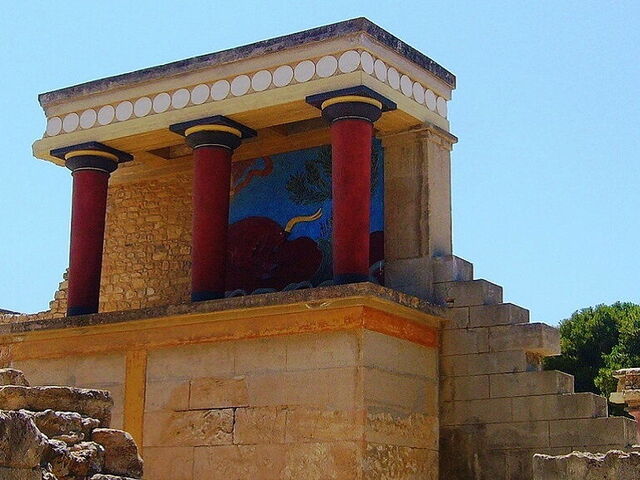
The Palace of Knossos and the Legend of the Minotaur
Did you know that the labyrinth of the Minotaur is not just a simple legend? It’s in one of Crete’s main towns, Knossos, that you can spot what might be the mythical maze that housed the half-bull, half-man Minotaur.
Knossos was the centre of Minoan civilisation and the most important archaeological site dating back to Bronze Age. This city was an important political, religious and economic centre that exploited the close river to develop its trades.
The beautiful Palace of Knossos was built on top of the hill where it was believed that Zeus was hidden by his mother Rea to save him from its father Cronus, who wanted to devour him. With its 20000 square meters, 1300 rooms and 5 floors, it is the biggest Minoan building ever built. Further to its largeness, the palace surprises for the variety of materials used and the beautiful still-existing decorations that adorn its areas. The best-known wall paintings found in Knossos are the “Bull Jumping” and “The Prince of Lilies”, which colors are still stunningly intact. Another interesting part of the building are Queen’s Baths, which present a modern sewage pipe system and some wonderful decorations.
The first site excavations were conducted by Minos Kalokerinos of Herakleion in 1878 and they were continued in the 1920s by a famous English archaeologist called Sir Arthur Evans. The complicated planimetry of a building where it was almost impossible to get orientated suggested that Knossos could be the place that had inspired the popular Minotaur legend.
The story tells that the maze was ideated by Dedalus, who was helped by his son Icarus in its realisation. As it was extremely intrigated , both of them were imprisoned by it and could only escape flying away, using the wings that Icarus had just finished building. The project was commissioned by Minos, King of Crete, to enclose the frightening Minotaur inside it. This monster with a half-bull, half-man body was born from Pasiphae, the king’s wife, and a white bull sent by Poseidon that made her fall in love. The wrath of King Minos induced him to oblige Athens, that had just been defeated in war, to send 7 girls and 7 boys in the labyrinth each year, to feed the monster. One day, Theseus arrived in Crete hiding himself in the group of kids and fell in love with Ariadne, the king’s daughter. With the help of Dedalus and Ariadne’s thread, Theseus killed the Minotaur and found the way out of the labyrinth.
Are you ready to dream inside this magic palace? Plan your visit and get charmed by the beauty of this site! Full-tickets cost €15 while reduced ones cost €8 and you can easily reach the Palace from the main cities of the island.
If you are looking for a lovely accommodation to rent for your stay in Crete, we suggest one of our charming holiday rentals in Crete.
© Alice Pilastri
Read More
Spanish cuisine is one of the most famous and appreciated in the whole world! Each region presents its own distinguishing flavors: coastal areas offer delicious fish dishes, in the North you will taste some excellent cheeses, while the restaurants found in the internal regions offer some good meat main courses. Thanks to the historical past of this country, which experienced the domination of various populations and cultures, its food tradition presents a rainbow of tastes coming from all parts of the world that perfectly mix together.
Have you planned a holiday in Spain? Don't forget to try its best traditional dishes!
Taste the explosive flavours of the Iberian Peninsula and get the most out of your stay: discover the top 6 Spanish dishes to try before you return home and follow our travel tips!
1) Paella
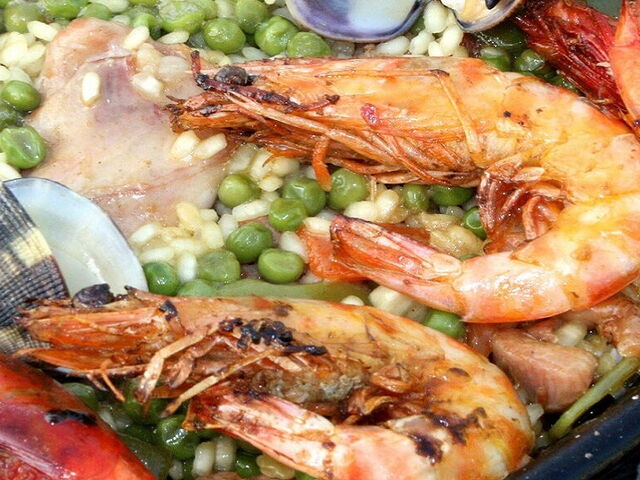
It is definitely the first dish that comes to mind when we talk about Spanish cuisine. The origins of paella are found in Valencia, where restaurants prepare the delicious "paella valenciana". It is basically a main course made with rice, saffron, vegatables like peas and tomatoes, meat and fish mixed in a large pan put over the fire. There are many varieties of it and they might include rabbit, chicken, prawns or mussels, depending on the area you're visiting. Don't miss it!
2) Tapas
A "Tapas tour" between city bars is something you absolutely need to try when in Spain! These small appetizers can incredibly vary and make the cook's fantasy fly. It's an infinite universe of tastes that includes all kinds of ingredients and no tray of tapas is like the other.
3) Churros
Churros are delightful fried sweets usually served with hot chocolated, where they can be immersed and pleasantly savored. They are often sold in street stands and they are perfect to end your meal in a sugary way or to start your day with a luscious breakfast.
4) Tortilla
A tortilla is not a simple omelette: made with onions, eggs and a lot of potatoes, it is prepared with a different procedure and it is one of the best-known Iberian traditions. It's always a good time for a tortilla in Spain!
5) Gazpacho
Looking for a fresh entrée to taste on a hot day in Spain? Choose a good Gazpacho, a traditional cold soup born in Andalucìa! This dish is made with onion, pepper, tomato, garlic, olive oil, salt, water and wine vinegar, then it is served with some minced cucumber and onion... you don't need anything more to get this special flavor!
6) Jamón Ibérico
Every single restaurant or bar will be glad to serve you some slices of prestigious Spanish ham, which is also called "pata negra" or "carne negra". It is often used to prepare tapas and its flavour is unique!
© Alice Pilastri
Read More
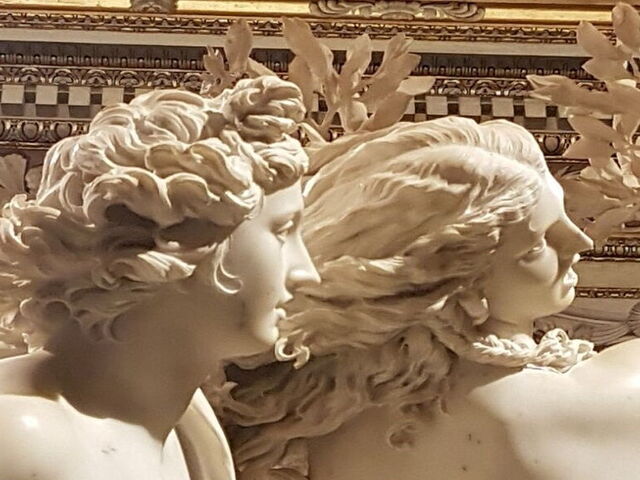
He’s one of the main Italian Baroque artists, known in every part of the world for his wonderful masterpieces. What distinguishes his artworks is the complexity of the positions, the fake perspectives, the great dinamism and the incredible scenographic composition. We’re talking about Gian Lorenzo Bernini, a sculptor who spent most of his life in Rome and who produced some beautiful works of art for Popes like Urban VIII or Innocent X.
Almost all his statues are conserved in the Roman museums, but it’s not easy to orient yourself between the tons of monuments that embellish this city. Here’s why we offer a guide to the places you need to visit to admire his wonderful sculptures to be able to see all of them in a few days!
If you are looking for a property to rent in Rome, choose our Rielli Apartment, Villa Aloe or Casale Fiano Romano, which are some beautiful holiday rentals near this city.
- Galleria Borghese
The museum is located inside Villa Borghese Pinciana in Rome, a palace dating back to the 17th century. Further to Berninis’ works, the rich collection that belonged to Scipione Borghese includes some masterpieces by Caravaggio, Canova or Titian. The first statue made by Bernini is the “Capra Amaltea”, a work dating back to 1609 presenting a goat breastfeeding Jupiter and a faun which was firstly believed Hellenic. There are also “Enea, Anchise and Ascanio” and the famous “Rape of Proserpina”, a wonderful work of art representing Pluton in the act of kidnapping the woman. Erotism, tragedy and an excellent technical ability in the making of soft silhouettes are the main features of this work. In the Gallery you will also find the “David”, which is a scenographic statue with a Biblic theme, the busts of Scipione Borghese and “Apollo and Daphne”, a stunning masterpiece portraying a nymph in the moment of her transformation into a laurel oak. If you wish to visit this museum, we remind you that it is necessary to book a ticket in large advance.
- Basilica di San Pietro
Bernini worked inside the main church of Rome for many years. For example, he made the majestic Canopy located in front of the altar under the commission of Pope Urban VIII and the resulti s just amazing: the monumental masterpiece is 30 meters high and it is richly decorated with various kinds of materials. Also, he worked on the square’s Colonnade in 1657 and chose to locate the columns in a way that tey “hugged” the worshippers reunited in front of the Pope. Bernini even produced the famous Saint Peter’s Pulpit, the funerary monument of Urban VIII, which is decorated with the allegories of Charity and Justice, and the wonderful monument of Pope Alexander VII.
- Piazza Barberini
This is one of Rome’s main squares and it hosts the amazing Fontana del Tritone, further to Palazzo Barberini, where Bernini worked for long.
- Chiesa di Santa Maria delle Grazie
In this church, a wonderful work of art is conserved. It is called “Ecstasy of Saint Teresa d’Avila” and it is famous for the theatrality of expressions and incredible scenography.
- Piazza Navona
In this charming square of the old town center there is a stunninf fountain clleed Fontana dei Fiumi, representing the four main world riversa s allegories of the four continents. It’s a work that needs to be observed from different points of view and it is located in front of Palazzo Pamphilij, where Bernini also worked for some years.
© Alice Pilastri
Read More
Since the beginning of April until the end of October, all those who are staying in Florence have the opportunity to visit a charming park located north of the city center. We are in Pratolino (Vaglia), on top of one of the innumerable hills that distinguish the Tuscan countryside and which are crossed by wonderful panoramic roads, where the simple act of travelling becomes a great pleasure.
It is here that you will find the Medici Park of Pratolino, and enormous garden surrounding the modern Villa Demidoff. This is a magical place with an ancient history that hosted some of the most important Florentine noble families and whose decorations were made by prestigious artists. Today, it is also the day trip destination chosen by hundreds of people who wish to spend a relaxing afternoon under the trees' shadow and who are always left speechless in front of the incredible beauty of the artistic frame they see around them.
The Park is situated in front of a Medici Villa built in 1568 by Buontalenti, who worked for Francis I. He wanted to make a luxurious and richly decorated building, where art would mix with nature and
science to create a fairytale place. Its enormous "garden of wonders" extended for 20 hectares and included fountains, games of water, labyrinths, artificial caves, magnificent gardens and some impressing artworks.
However, the building was abandoned following the death of Francis I and his wife and the first restoration works were carried out in the 19th century by the Lorraines, who almost demolished it completely. The family sold the property to a Russian prince called Pavel Demidoff in 1872 and it was him who built his own villa above the reamins of the previous strusture. This new Romantic-style villa was then bought by the Province of Florence in 1981 and in 2013 the site has been included in UNESCO's "World Heritage Sites" with other Medici Villas in Tuscany.
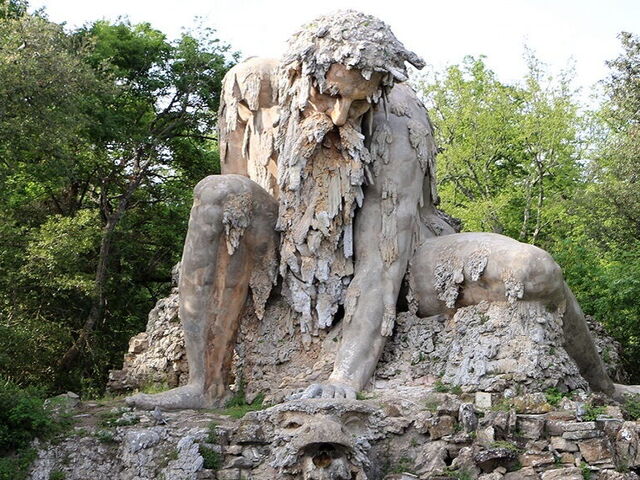
Hopefully, the wonderful Park still conserves some of the wonderful Renaissance and Baroque masterpieces. The most famous one is certainly the statue of the "Apennine Colossus" made by Giambologna in 1580 ca. representing the allegory of the mountain as a giant who seem to come out from the lake waters. The sculpture also hides some caves and rooms which are accessible through an internal staircase.
Furthermore, this splendid place is ideal for trekking and nordic walking lovers, who can enjoy its nature at the fullest. As the Park is a natural reserve, it also hosts many protected animal species, small woods and century-old trees. The huge garden is the perfect spot to choose for a picnic or a relaxing day out with your family, especially on sunny days!
If you are looking for a property to rent for your stay, we suggest booking one of our countryhouses, like Villa Mugello, Villa Caruso and Villa Tenuta Lonciano, or our Suite Michelangelo if you prefer staying in Florence's center.
© Alice Pilastri
Read More
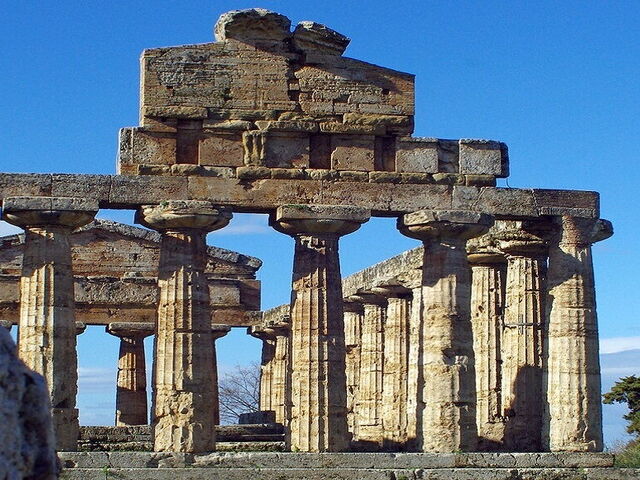
It's in Campania and not far from the beautiful center of Salerno that you will find one of the major Magna Graecia cities. We are talking about Paestum, an important archaeological site which still fascinates millions of visitors every year. This enormous park is located a few steps away from one of Mediterranean's most wonderful coastlines and from some amazing tourist destinations in Southern Italy, like Amalfi and Sorrento Coast. Ancient temples, splendid monuments, necropolises, pre-historical findings and majestic Roman walls enrich the beauty of the so-called “Archaeological Park of Poseidonia- Paestum”. Along with Cilento and with the National Park of Vallo di Diano, this place has been recognized by Unesco as one of its “World Cultural Heritage Sites”.
Start planning a visit to this beautiful place: read our article and follow our travel tips to spend a memorable holiday in Campania!
The polis of Paestum was founded by Greeks in 600 BC, when they first arrived to Campania's coast. The area was already inhabited and it is believed that the first human settlements date back to Neolithic Age. The splendid Greek buildings that you can see inside the Park are three temples, one Agora, various assemblies called “Ekklesiasteiron” and other symbolic palaces, such as the "Founder Hero Tomb".
The Temple of Neptune is the biggest, the Temple of Athena is located on the highest spot, while the Temple of Hera, also called “Basilica”, is the oldest exemple of Greek architecture in Campania and it dates back to 560 BC. During the Roman period other structures were added: these are the Forum, the Amphitheater, the sport Campus and the charming defensive city walls encircling the whole town for almost 5 km, which are surprisingly still intact.
The entrance ticket (9€/ 4,50€ ) includes a visit to the park and to the fantastic Archaeological Museum. Founded in 1952, the latter contains hundreds of findings dating back to Prehistory, Greek and Roman Ages. You will be able to admire the masterpieces found inside the Necropolis of Gaudo (III-IV millennium BC) and the famous “Tomb of the Diver”, a fresco that you have certainly already seen somewhere! This is one of the rarest pictorial evidences belonging to the Greek period, as works of art were usually portrayed on red or black vases. The scene represents a young naked boy diving into the ocean waters and it has a strong symbolic meaning, as it is the allegory of the passage from life to death, where men wish to find the survival of the soul.
Paestum is a splendid and unique place, where every visitor is accompanied in a journey back in time, surrounded by a magic atmosphere created by its architectural masterpieces. For this reason, famous artists such as Giovanni Battista Piranesi chose Paestum as a main stop of their “Grand Tour” in the 19th century! This trip was a discovery of the past and it was an intense experience that enriched artists, both spiritually and artistically, as it offered them some incredible sources of inspiration.
What are you waiting for? Start planning your holiday!
Visiting Paestum and its surroundings, you will have the opportunity to spend some relaxing vacation days with natural beauties, spectacular beaches, art cities and charming places like Amalfi. If you are looking for a property to rent for your stay, book one of our villas choosing between Villa Profumo di Mare!
© Alice Pilastri
Read More
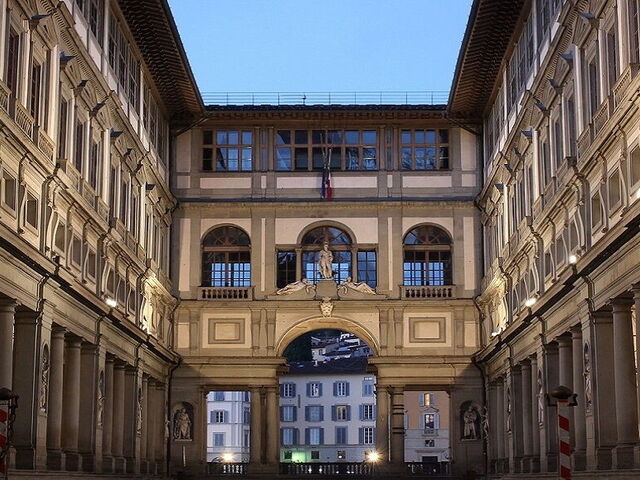
In these days, the magnificent Uffizi Gallery inaugurates its new halls dedicated to Caravaggio and other 17th century painters. It is the perfect occasion for you to finally organize your visit!
Follow us inside the most beautiful museum of the world and plan your visit in the best way!
The building was built in 1560-80 by Giorgio Vasari and it was commissioned by Cosimo I de’Medici. Initially, it had to house Florence's administrative and judiciary offices and it included a corridor linking the palace with Palazzo Vecchio and Palazzo Pitti, which was called “Corridoio Vasariano”. The first idea of setting up a real museum belonged to Grand Duke Francis I, who commissioned a splendid "Tribuna" conserving Medici family's treasures and a charming loggia on the last floor. In the following centuries, the Medici carried on this project but it was mainly during the period of Lorraine dominion that Uffizi Gallery enriched itself with hundreds of works of art.
Nowadays, it conserves some extraordinary collections of ancient sculpture, Medieval paintings and Renaissance masterpieces made by Raffaello, Botticelli, Michelangelo or Beato Angelico.
The Uffizi Gallery offers more than 45 halls: you will need a whole day to visit every section of it, but it is certainly worth it! Relax, do not rush and enjoy the beauty of every detail found in the paintings. Look at the masterpieces and admire their perfection to feel some incredible emotions that you will not find in any other place!
However, if you do not have a lot of time to spend here and you wish to know which are the halls you absolutely need to see in this museum, do not worry: follow our travel tips and read our short guide!
First of all, we suggest entering in Hall no.2, which is dedicated to 13th century art and to the splendid Madonnas belonging to Giotto, Cimabue and Duccio di Buoninsegna. Then, go to Hall no. 5/6 to see the main International Gothic's works, like "Adorazione dei Magi” by Gentile da Fabriano, and to Hall no. 7, which hosts the beautiful “Sant’Anna Metterza” by Masaccio and Masolino and the “Battaglia di San Romano” by Paolo Uccello. Do not miss Halls no.10/14, which are dedicated to magnificent works by Botticelli such as "The Birth of Venus" or the "Spring": these are the protagonists of the museum, which attract visitors coming from all parts of the world! Hall no. 15 conserves the splendid "Annunciazione” by Leonardo da Vinci, Hall no.35 presents the famous “Tondo Doni” by Michelangelo, while Halls no.57/58 hosts the wonderful Mannerist work called "Madonna delle Arpie” by Andrea del Sarto. Raffaello's masterpieces are in Hall no. 66, Hall no.83 is dedicated to Titian, while Hall no.90 presents works by Caravaggio. End your tour walking along the beautiful corridor on the last floor, where you will find dozens of ancient statues and a charming ceiling with a "grottesche" decoration!
The opening hours are 8.15AM-6.50PM from Tuesday to Sunday, while tickets cost €8/€4. However, we suggest booking your ticket online before the arrival paying an extra of €4, in order to avoid queues and long waiting times.
If you are looking for a holiday rental, choose your favorite one among our numerous villas in Florence!
© Alice Pilastri
Read More
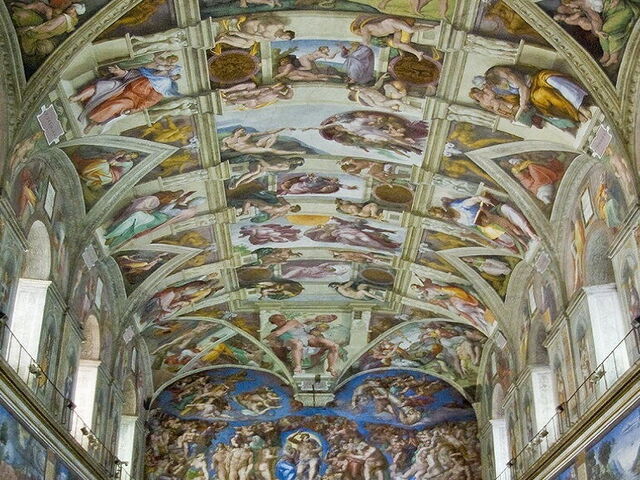
It is one of the must-sees of Rome, a masterpiece of Renaissance art, one of the most important Christian places and the most magnificent work by Michelangelo. We re talking about the Sistine Chapel, a stunning hall built next to St. Peter’s Basilica hosting Pope’s conclaves since the 15th century.
Let the colorful frescos take your breath away and organize your visit to spend some unforgettable moments surrounded by pure beauty!
The opening of the Chapel dates back to 1483, under Pope Sixtus IV. In the following years, artists like Pinturicchio, Ghirlandaio, Cosimo Rosselli and Botticelli painted the middle tier with the “Stories of Moses and Jesus” inspired by the Old and New Testament. Some of the scenes are “The Trials of Moses”, “The Temptations of Christ” or the famous “Delivery of the Keys” made by Perugino. The inferior tier presents a simple decorations with some fake curtains.
Another artist who worked in this site was Michelangelo, who received the commission from Pope Julius II in 1508 and concluded the project in 1512. His frescoes cover the whole surface of the vault, for a total of 1200 square meters.
The central scenes follow the iconographic project proposed by Egidio da Viterbo, who chose to represent the Stories of the Genesis in nine boxes. Each scene is framed by a fake marble architecture where four young “ignudi” are leaned on. The best-known among these is certainly the “Creation of Adam” portraying Adam in the act of touching God’s finger to be instilled by the Holy Spirit. The lateral scenes represent Sybils and Prophets, which are soothsayers of Christ’s arrival, as well as Jesus’s ancestors and some miraculous events in favor of Jewish people.
The beautiful bodies of the “ignudi” are some masculine nudes symbolizing humanity in its numerous forms of physical beauty. These figures have a great expressivity, they assume complex positions and they celebrate the most important divine creation, which is man.
It was still Michelangelo who painted “The Last Judgement” between 1536 and 1541 behind the altar of the Chapel. In order to prepare the wall, the artist used a tilted bricks’ coverage to avoid the deposit of dust and to allow a better sight of the masterpiece from the bottom. He then chose to make a “good fresco” based on blue lapis which illuminate the work in a unique way. The azure background is crowded by many bodies which spin and circle around Christ. Inside the lunettes, the artist portrayed some angels with no wings who carry the symbols of Passion. The numerous figures have complex positions, intense facial expressions and a desperate pathos, especially in the case of the souls destined to Hell.
However, the fresco received a lot of critics because of the iconographic anomalies and the presence of too many naked bodies in a sacred place. Michelangelo’s justifications were of no use and, in occasion of the Council of Trento of 1564, an artist called “Braghettone” was charged to censure the scene covering all the naked bodies.
Visit the splendid Sistine Chapel! As it is part of the Vatican Museums, you will have the opportunity to buy a ticket that also allows you to visit its wonderful halls. The full-price ticket costs €17, the reduced ticket costs €8 and there are discounts for students, schools, pilgrims and families.
Do not forget to have a look to our properties in Rome and choose your favorite!
Read More