Archive for "Dream Places"
Planning a trip to Italy? Browse and read our useful and informative articles about the endless range of attractions and experiences in this lovely country.
Travel through the beauties of Italy with us. Visit our blog!
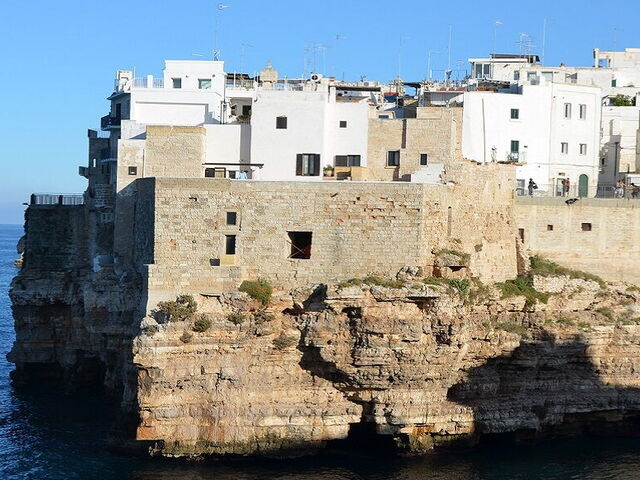
Polignano a Mare is one of the best towns to visit in Puglia and its colors, artistic and natural heritage will certainly leave you speechless. It is located along Italy's Adriatic coast, a few kilometers far from Monopoli and from the magnificent Alberobello. It is here that tourists coming from all parts of the world spend their summer holidays, as they wish to capture the white houses, the splendid sea caves, the historical town center and the ransparent sea waters in some magnificent photographs. This is a magical wonderland recognized as one of Italy's most beautiful places!
The history of Polignano a Mare is very ancient: in fact, it is believed that the first human settlements date back to the Neolithic and that this harbor was used as a Eastbound ships seaport for long. Some wonderful archaeological artifacts were found in this area and were transferred to some of the world's major museums, like the “Large Vases” decorated with red figures dating back to the 4th century BC conserved inside New York's MET.
The old town center is a small labyrinth of charming streets whose walls are decorated with anonymous poems and century-old churches, such as Chiesa Matrice di Maria Assunta or Abbazia di San Vito. You can enter the historical center passing through the majestic Porta Grande, which is part to the big 16th century city walls. nearby, there are some beautiful panoramic terraces we suggest visiting, as you can admire the splendid seafront and the famous Lama Monachile (or Cala Ponte), a charming natural cove separating two steep stone walls highlighted by bright water colors. Try to spot some of the stunning sea caves along the coast, which made Polignano so famous! Unfortunately, the outstanding “Grotta Palazzese” is not visible from any site, but you can see it boarding on one of the tourist boats to look at the best hidden corners of this town!
Start planning your visit to Polignano a Mare and fall in love with its poetry, its perfumes, its colors and music!
Spend a special holiday on the strains of “Nel blu, dipinto di blu” by Domenico Modugno, who was inspired by the colors of this dream location, and visit one of the most incredible places found in the Mediterranean!
If you wish to make your stay even more wonderful, book one of our villas for rent near Polignano a Mare, like Masseria Terra Rossa, Villa Mimosa or Villa Solglime!
© Alice Pilastri
Read More
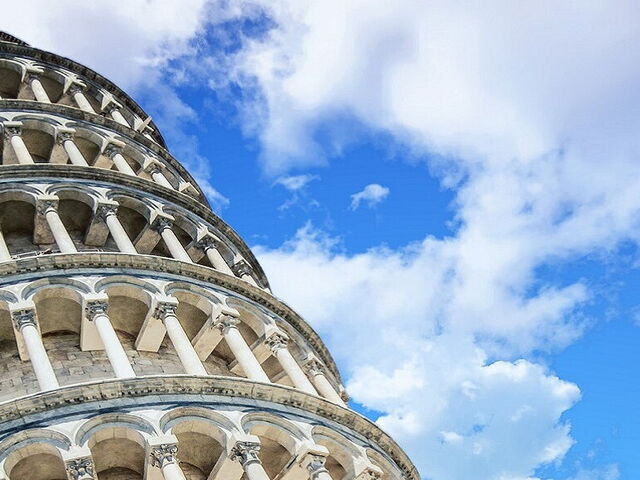
The Tower of Pisa is a monument that everybody is able to recognize seeing a picture of it. Along with the Colosseum, it is one of Italy's symbols and it appears in the "New 7 Wonders of The World” list because of its incredible beauty. This white leaning tower that seems to fall to the ground at any moment is located in Piazza dei Miracoli, next to the famous Cathedral of Santa Maria Assunta, to the Baptistry and to the Camposanto.
If you are staying in Tuscany, you cannot miss the occasion to visit this unique place!
What about its history?
The construction was started in 1173 by architect Diotisalvi, who also designed the Baptistry. However, the work was not carried out before 1350 because of the various delays and problems that emerged. The building reached a 56 m height and it arose next to the Cathedral, as it was its bell tower. In fact, the tower's interior is formed by two halls called "Sala del Pesce", as it contains a low relief representing a fish, and a bell room including seven ancient bells. The exterior is decorated with eight floors of loggias with columns and blind arches, built using the white marble of Carrara.
But why does the Leaning Tower...lean?
What makes this monument unique is its inclination. Is it an architectural virtuosity or a simple human mistake?
Actually, the correct answer is the second one. The soil under this heavy construction was sandy, clayish and not solid enough to support it, so the tower started to sink. This is why the works have been suspended over and over again and the attempts to solve the issue were vain. The 19th and 20th century restoration works did nothing but worsen the situation, which was finally stabilized in 1999-2001.
This “tower that leans and leans but will never come down" is one of the most visited Italian monuments: book your ticket and visit it during your next stay in Pisa!
The entrance ticket costs 18€ and online booking costs €10. You will have the opportunity to enter this beautiful building, to climb its 300 steps staircase and to admire a spectacular panorama from its top!
Are you looking for a holiday rental in Pisa? Choose one of our properties near this town and spend a dream holiday in Tuscany!
© Alice Pilastri
Read More
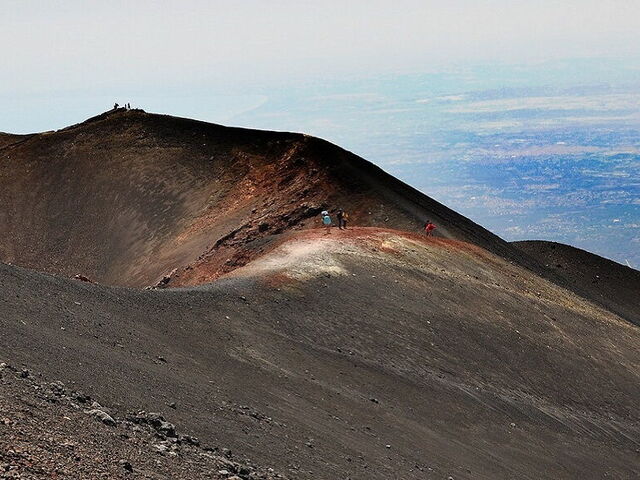
Etna is the largest volcano in Europe, a popular tourist destination in Sicily and an important center for scientific research that allows thousands of geologists and volcanologists to collect their data. The contours of its shape stand out on the blue sky and dominate cities like Catania, Taormina e Acireale, which are some charming centers in Western Sicily. The Mount reaches a height of 3343 m., it has been included in UNESCO's “World Heritage List” in 2013 and it is admired by countless visitors since more than 3000 years.
Mount Etna has always been celebrated for its incredible beauty, connected to the uncontrollable power of Mother Nature and its ability to destroy everything at any time leaving no chance to escape. In fact, it is an active volcano whose mouths always let a plume of smoke spill out and eruptions are frequent. The numerous lava flows also modified the territory, creating a unique and peculiar environment.
“Etna Natural Park” presents some small inhabited centers, green woods, steep stone walls, arid areas, perpetual glaciers and many smoking mouths scattered along the mount's slopes. This is the ideal destination for travelers who love sports and natural excursions, as it offers dozens of different activities! The trekking trails are many and they sensitize on the necessity to protect this special environment. Both beginners and expert athletes will be invited to visit some incredible places, such as Valle del Bove, a volcanic depression with deep canyons, or Grotta del Gelo, a cave with perennial ice.
The Park can be visited in every period of the year and it is suitable for cycling, mountain climbing, trekking and ski lovers: actually, the snowy mount's peak welcomes thousands of skiers from December to April and it offers long trails and efficient ski-lifts! Moreover, it is right in this area that some important competition have taken place, like some recent “Giro d’Italia” editions.
Look at the amazing panoramic views from the top of the volcano and take a picture to the landscapes colored with citrus groves, infinte woods, vineyards and with the wonderful shades of the Sicilian sea. If you are lucky, you will also have the occasion to watch one of its eruptions, to look at its burning slopes and at the sky lighting up with beautiful lava gushes!
Organize your trip and book one of our villas for rent near Mount Etna! We suggest our Taormina Suite!
© Alice Pilastri
Read More
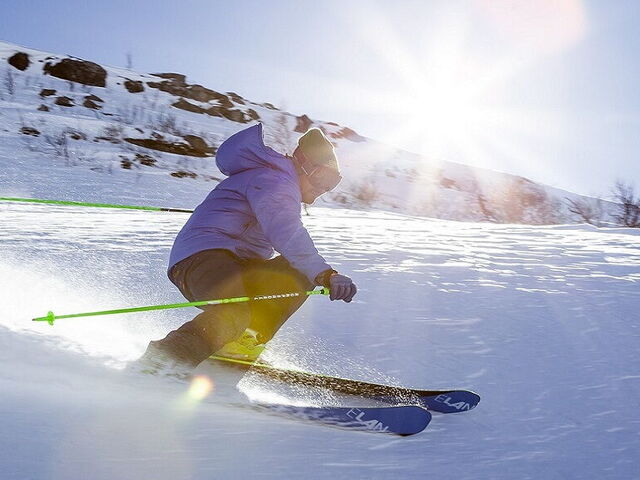
Few Italian Regions are diverse like Tuscany, which can really offer some unforgettable experiences in whichever period of the year to all its first-time visitors. Further to the sweet hills covered by cypresses and sunflowers, further to the magnificent Dome of Florence or the Leaning Tower, further to the splendid beaches of Elba Island and to the immense nature of Maremma, there is much more to discover!
Maybe not all of you know it, but wintertime is the period for thousands of skiers to go to the best Tuscan ski slopes to spend an exciting weekend out or to organize a special ski trip here!
Right when the snow starts to fall, Tuscany becomes a renowned destination for sport tourists and for all those who love snow activities. Discover which are the best destinations and start planning your next winter excursion!!
1) PISTOIA APPENNINES
It is probably the best-loved ski trail in Tuscany and it is near Pistoia, not far from the border with Emilia-Romagna. Abetone mountain reaches a peak of 1388 m and it offers a school-camp for children and some trails for expert skiers, which are equipped with some efficient ski-lifts. In the neighborhood, there are also Le Regine, Pulicchio and Val Di Luce trails, which are just perfect for adrenaline lovers as they offer black, red and blue tracks! You can reach higher peaks visiting Alpe Tre Potenze, La Selletta, Libro Aperto and Monte Gomito, which offer the famous "Zeno" trails designed by the ski champion Zeno Colò and some amazing panoramas to admire from the top. Those who love snowboarding will be also able to challenge each other racing on these long slopes branching off the woods And there is more to come: visit the two snow parks equipped with obstacles to try some exciting jumps or go to the ring-shaped trail for cross-country ski! Well, this is certainly a place that will not disappoint you!
And where to sleep? Book our Villa Lugliano!
2) LUNIGIANA
Lunigiana offers a single ski trail called "Zum Seri", but its beauty deserves to be seen at least once. The panoramic sight from the top extends as far as the eye can see over snow-clad woods, reaching the waters of Mar Ligure in the sunniest days. Children, families and all kinds of skiers are welcome to try these rails even if the snow hasn't fallen in large quantities, thanks to the numerous snow cannons. In total, the trails cover 12 kms and the fun is absolutely guaranteed!
And where to sleep? Book our Villa Saida!
3) GARFAGNANA
Lucca's province includes the well-known region of Apuan Alps and the area of Careggine plateau, Passo delle Radici and Casone di Profecchia. Give a try to cross-country ski, Alpine skiing, snowboard or finally take the decision of learning to ski in this rail, which is particularily suitable for first-timers. The wonderful panoramas with woods, mountains and parks covered with snow will make your experience even more pleasant!
And where to sleep? Book our Villa Il Nido!
4) MONTE AMIATA
Even Southern Tuscany can offer some fantastic emotions on the snow! Right in the middle of one of Europe's largest beech woods, you will find a 10 km-track for Alpine ski, a 10 km-track for nordic ski and various school-camps. The most audacious visitors choose this destination to hurtle on the famous rails that have hosted various international competitions and European championships. The charming landscapes near Monte Amiata are the ideal place to be discovered by those who love natural excursions and hiking trails, while history aficionados can seize on a visit to some splendid Medieval villages.
And where to sleep? Book our Villa Castiglione!
© Alice Pilastri
Read More
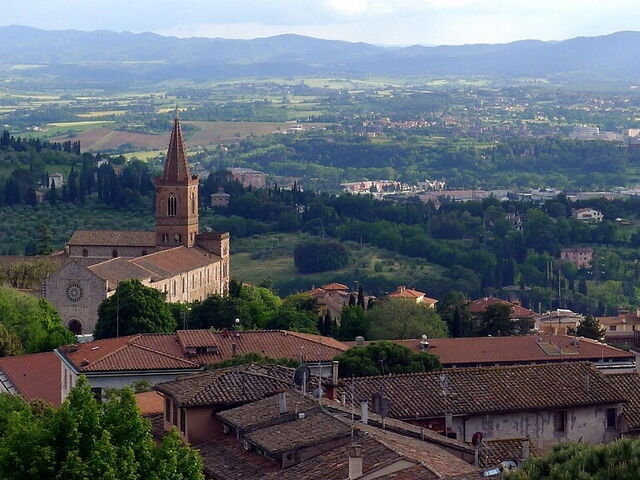
Perugia is a town where culture, history, music and art mix with each other to form an incredible ambiance. This Medieval fortified "borgo" can be visited in a single day and it always leaves its visitors speechless in front of its beauty. Young students who attend its ancient university and tourists coming from all parts of the world crowd the historical center at every hour of the day to admire the splendid monuments and to enjoy its amazing events.
We are in the middle of Umbria, not far from some of its main cities like Gubbio, Foligno or Orvieto. Etruscans, Romans and other ancient populations inhabited this region, but it was especially during the Middle Ages that Perugia reached the peak of its splendor thanks to the making of many beautiful buildings and works of art.
But what are the best things to see in Perugia?
Our must-see attractions list starts with the wonderful "Fontana Maggiore" in Piazza IV Novembre, built by Nicola and Giovanni Pisano between 1275 and 1278. Two pink stone basins are decorated with three nymphs, some bronze figures symbolizing the legendary foundation of the city and two scenes inspired by Aesop's fables. Get ready to be charmed by its beauty!
We also suggest visiting the splendid Cathedral of San Lorenzo, which is the main city dome built in honor of the patron Saint in 1345-1490, or the so-called Oratorio di San Bernardino, a Franciscan chapel built in stone and polychrome marbles.
Another thing to see is the "Rocca Paolina", commissioned by Pope Paul III to Antonio da Sangallo il Giovane. This majestic symbol of papal authority was destroyed when the region was annexed to the Kingdom of Italy and today there is nothing left but the cellar. Explore these dark tunnels and discover the mysteries of Perugia! The journey in the city's depths continues climbing down the stairs of the famous Etruscan Well built in 300 BC, which is 37 meters deep.
Do not forget the fantastic museums that Perugia offers to its guests! Palazzo dei Priori hosts the Collegio del Cambio, presenting frescoes by Perugino and Raffaello in some of its halls and the beautiful Galleria Nazionale dell’Umbria, where you will have the possibility to admire the famous masterpieces by Pinturicchio, Duccio di Buoninsegna, Perugino and Piero della Francesca.
Also, he gluttons will not be disappointed by Perugina House of Chocolate and by the sweet tasting at the end of the visit!
Choose this town as your next holiday destination in Central Italy or decide to stop here during your road trip between the wonders of Umbria!
Do not forget to taste some local specialties like the “faraona alla leccarda”, which is a guinea-fowl with chicken livers, spices and white wine, or the “torta al testo”, a simple salty "schiacciata" seasoned with tidbits like truffles.
Start planning your trip, book one of our villas in the region and take part to its incredible events like “Umbria Jazz” festival in July or ”Eurochocolate” festival taking place in October.
© Alice Pilastri
Read More
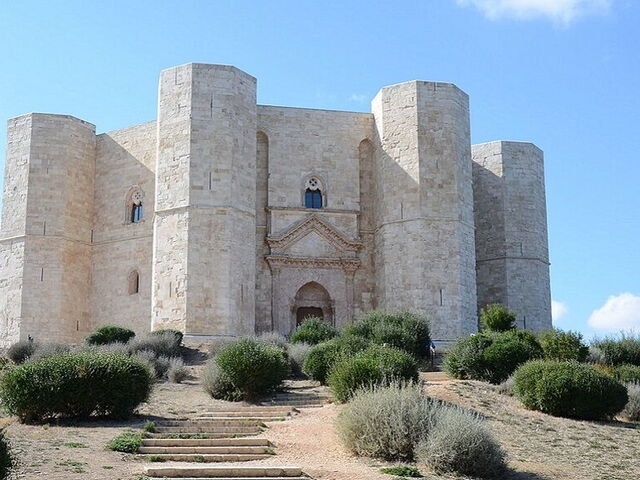
It is one of the most-visited Italian monuments and certainly one of the most unique. Castel del Monte stands out on top of a hill 540 m high and its majestic aspect is visible from a distance. White, enormous and impressive, this building has an incredible beauty that you absolutely need to see during your stay in Apulia.
We are near Alta Murgia National Park, about sixty kilometers far from Bari and thirty minutes far from the sea of Bisceglie and Molfetta. The castle's position is intentionally isolated in order to satisfy the Medieval defensive necessities, but it is easy to reach using the main regional roads.
Castel del Monte was built by Frederick II of Swabia in 1240 using calcareous stone. Actually, the Empire's capital was moved from Palermo to Foggia in 1223, therefore the monarch had started promoting many important architectural projects in Apulia.
Its exemplarity, the perfect harmony of its shape and the union between Northern European, Muslim and classical stylistic features have been officially recognized by UNESCO, that included the Castle in its “World Heritage Sites” in 1996.
In fact, the building presents a peculiar octagonal shape, with eight corners, eight towers and eight one-hole windows on the first floor. The number 8 is repeated in the inner courtyard shape, which is decorated with blind arcades and by some beautiful marble statues. Unfortunately, many of the decorations found inside this castle have been lost throughout the years or have been moved to some museums, such as the "Pinacoteca Provinciale di Bari". However, it is still possible to admire the rests of some wall frescoes, floor mosaics or the two famous anthropomorphic shelves inside Torre del Falconiere.
The original function of the building is still uncertain. Some affirm that it was exclusively defensive, some that it served for political representation, while others highlight how it has also been used as a prison or as location for important ceremonies, such as the wedding of Frederick's daughter.
There are many symbols hidden inside this wonderful castle. The octagonal planimetry forms an intermediate shape between the circle and the square, which represent the sky and the land. Moreover, it has a strong relation with the light, which exalts its corners in every moment of the day, especially in occasion of the Autumn and Spring Solstices, when the sun rises exactly in front of the entrance door.
Organize your visit to Castel del Monte and let it impress you with its beauty! The entrance ticket costs €7 or €3,50, there are discounts for large groups and it is possible to book a guided tour.
Are you looking for a villa for rent in Puglia? Check out our luxury holiday rentals in the region and choose the one that suits you best.
Read More
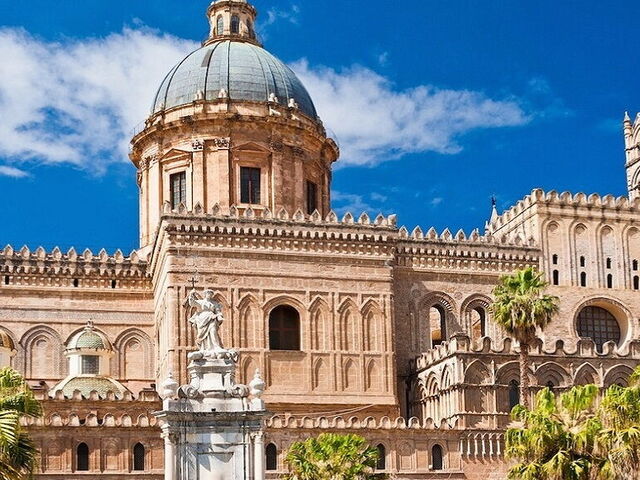
Few places collect in a couple of square kilometers as much beauty as Palermo, a Sicilian town which has been a land of conquests, dominations and joyrides. Four thousand years of history, innumerable different races and dozens of languages have mixed in a unique and magic locality like no other.
This city has often changed its name: the Carthaginian founders called it "Ziz" (“the flower”), then the Greeks who colonized it defined it "Panormos" (“all-harbour”) and transformed it into one of Magna Graecia's main centers. A couple of centuries later, Romans distorted the name into "Panormus", while Arabs renamed it "Balarm" and Normans "Balermus". Finally, the city obtained the name of "Palermo" during the Modern Age and it still persists today.
Its rulers did not destroy this center, but they put effort into building and creating a fantastic container of art and architecture masterpieces giving it the name of "the vastest and most sublime metropolis of the world".
And thisdecision was a real luck, as the number of its invaders has been extremely large! After the Phoenicians, Greeks and Romans, Palermo was occupied by Vandals and Ostrogoths, who were lately replaced by Belisarius' Bizantines. Arabs arrived in the 12th century and the city became the capital of their "Ṣiqilliyya" Sultanate until 1097, when Normans arrived from Scandinavia followed by Swabians, Angevins and Aragoneses. Then, Palermo became part of the Spanish Crown and it passed to Savoia and Borbon families until its annexation to the Kingdom of Italy in the 19th century.
Each of these conquerors, especially Normans and Arabs, wanted to leave a trace of their passage. This is why Palermo is decorated by many important architectural gems which made it become a UNESCO "World Heritage Site".
A visit to this city is really an embarassment of riches! Visitors can start their tour with the magnificent Palazzo della Cuba, a typical Arab building partly restored by Normans, and they can continue with the Norman Palazzo della Zisa. They can even choose to make some time jumps passing from Baroque-Rococò style to Romanesque, returning to Roman Age and suddenly going to see some Renaissance and 19th century palaces.
Get carried by the old town center streets and live a real time-shift! Meanwhile, you will have the opportunity to meet Sicilians, a variegated people shaped by the various dominations. Listen to the sounds of the city, enjoy the typical citrus fruit smell and taste the flavours of one of the richest and delicious cuisines of the world!
Obviously, you cannot forget to visit the majestic Palazzo dei Normanni! This enormous building is a harmony of architectural styles and it is the oldest royal palace in Europe, which hosted the Kings of Sicily, Emperors Frederick II and Corrado IV and the historical Parliament of Sicily. Inside it, you will find a real art jewel, the Palatine Chapel, a place of worship built by Ruggero II and consacred on April 28th 1140 as the royal family's private chapel. It is so beautiful to take your breath away and it is worth a whole trip!
Further to this monument, we suggest seeing the wonderful Duomo di Monreale, the Cathedral of Palermo and the royal graves, the famous Teatro Massimo Vittorio Emanuele, the Renaissance Palazzo Abatellis, the Chiesa della Martorana or some of the splendid Catacombs.
Plan your visit and book one of our luxury properties in Sicily: our suggestion is Villas to rent in Sicily.
Read More
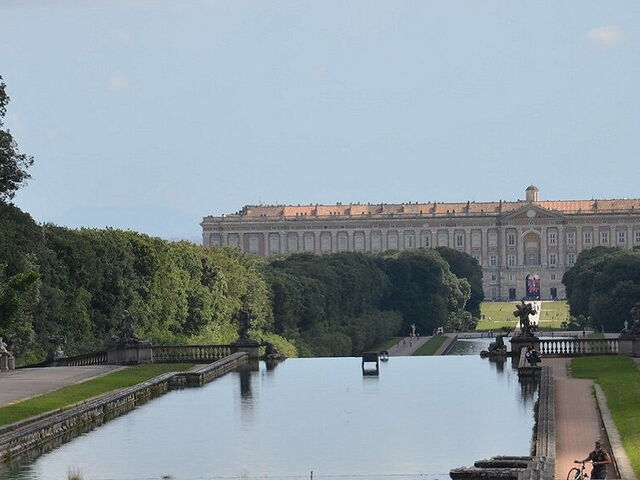
Did you know that the world’s largest royal palace is in Campania, in the beautiful city of Caserta. Declared a “UNESCO World Heritage Site”, this building is the demonstration of how wonderful human artworks can be. Everyone is left with their mouth open in front of this architectural masterpiece of incredible dimensions which seems to extend as far as the eye can see.
The works for the “Reggia di Caserta” started in 1751 with Luigi Vanvitelli and it was concluded by his son Carlo in 1845. In this period, Rococo style was facing its downfall and it was leaving space to Neoclassicism, which will mark the 19th century with a strong artistic opposition to all the previous stylistic features. For this reason, the palace presents the cohabitation of various artistic styles and the result is outstanding.
The Baroque-Rococo style is distinguished by a decorative overabundance and by an exaggeration of complex curved shapes. The best example is the "Grand Staircase of Honour”, which also became the source of inspiration for makers of other following staircases. Alongside this majestic structure, you will admire some big statues and two spectacular staircases ending with two small temples and a "fake" decorative dome.
Instead, the Neoclassical style was inspired by Greek-Roman arts and was distinguished by semplification, geometrization, rationalism and decorative austerity. An example is the outer façade, which presents scarce decorations, plain colours and a rational quadrilateral structure.
The artwork commission was presented by Carlo III Borbone, who wanted to make Caserta the new cornerstone of the Kingdom of Naples.
It is a huge structure with a 47000 sq. m. surface, composed by five floors, four inner courtyards, some historical apartments, one "Palatine Chapel", a theater, the so-called "Quadreria" and a magnificent park. The gardens are divided in two parts and their style mixes the typical Italian Garden elements with the English one. Walk along the splendid boulevards embellished by fountains, sculptures and small woods, until reaching the incredible final waterfall! Inside the park, you will also find some beautiful thematic sculptural groups such as the one dedicated to hunting with "Diana and Atteone Fountain", which all represent humanity's achievements and progress.
The Royal Palace of Caserta is definitely an open-air masterpiece concealing innumerable wonders.
If you are staying in Campania for a few days or for a long summer holiday, do not forget to plan your visit to this stunning place!
Opening hours of the historical apartments, the park and the Quadreria are 8.30am-7.30pm, while the "Decorative Arts Tour" to the Staircase of Honour is by reservation only. Tickets cost €12 (full-price), €6 (half-price) and are free for under-18s.
Looking for a luxury holiday rental? Choose your favorite among all our properties in Campania, which are located in some of the most beautiful parts of the region to guarantee an unforgettable experience!
Read More
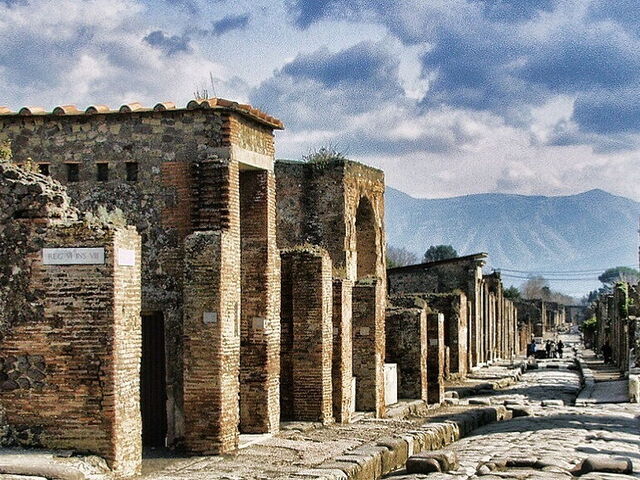
One of the best tourist destinations in Southern Italy is certainly Pompeii, a magical and magnificent place in Campania which has also been recognized as a “UNESCO World Heritage” .
Pompeii was founded around the 8th century BC by Osci, who occupied the territory near Vesuvium, and it was later conquered by Greeks, Etruscans, Samnites and Romans. The Roman period starting at the end of the 3rd century BC was one of the most flourishing ones, as the city became an important commercial, economic and cultural center.
In 62 BC, a strong earthquake destroyed Pompeii, but the reconstruction attempts proved to be useless when an apocalyptical tragedy stroke the city in 79 BC, deleting it completely.
On the morning of August 24th, after a series of violent earth tremors, a terrible Vesuvium eruption took place. The air became unbreathable because of the presence of sulfur, the sky darkened as ash filled the atmosphere and an enormous black cloud started to move in, blocking every glimmer of light. The area around Pompeii got totally covered by ash and lava, while Ercolano was submerged by incandescent mud for 20 meters.
After that day, nothing was left and these towns literally disappeared from the face of Earth. Nobody knew about their existence until the 16th century, when some evidence was found during the works for the creation of a water canal, even though another eruption in 1613 covered everything once again. It was after an accidental discovery by a farmer that a regular excavation project started off in the 18th century, under the promotion of Duke Emanuele Maurizio d’Elboeuf and Carlo III di Borbone, which succeeded in bringing to light a wonderful ancient world.
Nowadays, you have the opportunity to visit Pompeii's excavations to admire its splendid monuments and to see the famous plaster casts reproducing the facial expressions, positions and clothes' folds of Pompeii citizens in the moment of the impact with the violent eruption. You will be walking in the ancient city center near the Forum, Apollo's Temple and the Amphitheater built in 80 BC. Also visit "Casa del Fauno", an ancient Roman villa with a wonderful mosaic, or "Teatro Grande", a majestic bulding dating back to the 2nd century BC.
You can check opening hours on the ticket office site, as they change depending on the period you choose. Tickets for Pompeii site cost €13 or €7,50, while the cumulative ticket including Pompeii, Ercolano, Oplonti, Stabia and Boscoreale sites costs € 22 or €12 (entrance is free for UE citizens under 18 or over 65 years old).
Even "New Pompeii" conceals some wonders in its center: visit "Santuario della Vergine del Rosario" and "Villa dei Misteri", then relax going shopping in the numerous shops and stop eating something in one of the delicious local restaurants!
Read More
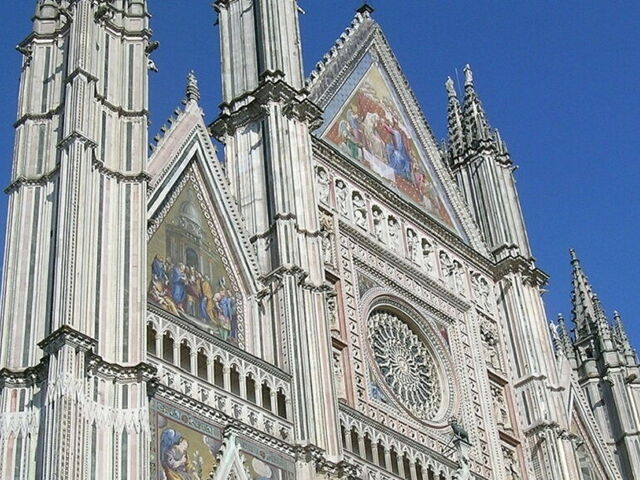
An ancient Italian saying goes “it's like Saint Patrick's well” to indicate an interminable challenging endeavor with no apparent logic. But does a well with this name really exist?
Yes, it actually does and it's located in Italy, in a splendid city in Umbria called Orvieto.
This architectural and urbanistic jewel in Alta Val Tiberina is situated between Latium, Umbria and Tuscany and it plunges its roots in mysterious ancient times. With its magnificent gothic Dome and its old town center castled on top of a hill dominating river Tiber, Orvieto has always represented an irresistible place to live in, especially for Etruscans. It has been an important commercial, artistic and military center and it is still considered a magic place by its inhabitants.
People believed that Orvieto was a sacred town, indissolubly linked to the element of water and to Earth's depths. This mysterious aura also encloses one of the most intriguing and significant monuments in Orvieto, Saint Patrick's Well.
Finished in 1537, the well was projected and built by Antonio da Sangallo il Giovane on order of Pope Clement VII, who had found shelter in Orvieto after the Sack of Rome (1527). The well had to provide water to Albornoz castle in case of siege, it was 62 meters deep and it presented two double-helical staircases which did not cross and could therefore accelerate water's transport.
But why is there a well named after Saint Patrick in Orvieto, as he spent his life in Ireland?
Actually, the legend tells that the Saint prayed near a deep cavern in Northern Ireland where he could get in contact with the afterworld. The cave was also called "Saint Patrick's Purgatory" and it was shut down by Alexander VI Borgia in 1457. However, its memory spread all over Christian Europe through the "Via Francigena", reaching cities like Orvieto. And it's here that a well was built almost one century later and where it also adopted a strong spiritual meaning.
Actually, climbing down its 248 stairway steps will make you reach Earth's depths surrounded by an Infernal unknown darkness after a strange “atonement process”. This mystic experience will end with water, symbol of purity and life and it will make you feel incredible emotions which cannot be described in words, but need to be lived in first person.
The tradition wants that whoever visits this well throws a coin in it, as it is believed that this action will help you to return to Orvieto once again.
Meanwhile, book now one of our properties near the city center to organize a wonderful vacation in thic locality! We recommend our Casale Porano!
Read More